Here is a brief summary on getting a mortgage loan while in a Chapter 13 Bankruptcy:
You must have 12 payments paid into the Chapter 13 before you can apply for a mortgage loan.
The payments must be made on time for last 12 months or after 12 months if you have been in longer, so no late payments to the Chapter 13 while in it.
You have to ask permission from the courts to seek a mortgage loan. They usually grants this. I have never not seen them grant it.
You have to qualify with the new house payment along with Chapter 13 payments and other debts listed on credit report. Debt to income ratios usually center around 31 and 43% respectively, meaning the new house payment should not be more than 31% of your gross monthly income and your total house payment and debts listed on credit report along with Chapter 13 payment should not be more than 43% of your total gross monthly income.
Credit scores: Most FHA lenders I work with will want a 620 middle score. You have three fico scores from Experian, Equifax, and Transunion, and they throw out the high and low score and take middle score. For example, if you had a 598, 679, and 590 scores respectively for all three bureaus listed above, your qualifying score would be 598.
There are some FHA investors that I am set up with that will go down to 580, but I have seen in my past experiences 620 will get you a better deal and far greater chance of closing on your loan with FHA.
Down payment: For FHA loans, you will need to have at least 3.5% down payment saved up. It is extremely hard to find a no money down loan program to get you approved for a mortgage while you are in a Chapter 13 plan.
FHA and USDA are really the only two options that I know of that offer financing for a borrower with a current Chapter 13 Bankruptcy plan plan, so keep that in mind.
Conventional loan program offered by Fannie Mae will not allow a mortgage loan for someone in a Chapter 13 Bankruptcy plan.
On USDA loans, it is possible to get 100% Financing after you have paid into the plan for 12 months with a good pay history. The credit scores needed for a USDA loan approval really need to be above 640 in my past experience in getting them approved. A lot of USDA lenders will say they will do down to 620, but it is very difficult getting them approved. Best to get your scores up to increase your changes in qualifying for a USDA loan. There is not much that difference in getting your scores up to that range if you are at a 620 score now.
With USDA loans, they have income and property eligibility requirements that FHA does not have, so below is a rough run down of FHA vs USDA loan for you:
Typically, USDA-eligible properties are located in rural areas. It is a mistake, however, to think that you have to live far out in the country to qualify for a USDA loan. USDA-eligible properties are often located near urban areas.
A property’s eligibility is determined by its location with respect to USDA’s map of eligible locations. The USDA program also places limits on your household income based on median earnings in an area. If you exceed that limit, you can’t obtain a USDA loan.
The FHA, by contrast, does not place limits on household earnings. The FHA, however, does establish a maximum limit on the amount of money that can be borrowed through the program.
So if you were in a hurry to buy, after you have been in your Chapter 13 plan for 12 months, I can look at getting you approved to buy a home if you wish:
How to Get Approved for a Kentucky Mortgage While in A Chapter 13 Bankruptcy:
If you have questions about qualifying as first time home buyer in Kentucky, please call, text, email or fill out free prequalification below for your next mortgage loan pre-approval.
This web site is not the FHA, VA, USDA, HUD or any other government organization responsible for managing, insuring, regulating or issuing residential mortgage loans.
All approvals and rates are not guaranteed, and are only issued based on standard mortgage qualifying guidelines
Remember, we are even available this weekend for pre-qualifications or questions. Call our cell phone or email us. If you miss us, leave a message and we WILL call you back
Kentucky FHA Loan Guide 2026: Limits, Gift Funds, KHC Down Payment Help, and Welcome Home Grant
Buying a home in Kentucky in 2026? This guide breaks down the FHA loan limit, gift fund rules, KHC down payment assistance, and the Welcome Home Grant in a clean, mobile-friendly format with no scripts.
2026 FHA limit: $541,2873.5% down with 580+KHC DAP up to $12,500Welcome Home opens April 6, 2026
If you are a Kentucky first-time home buyer, or even a repeat buyer looking for a low down payment option, FHA financing remains one of the strongest mortgage programs available in 2026. FHA works well for many buyers because it allows a lower down payment, flexible credit guidelines, and in many cases the ability to combine with down payment assistance.
On top of that, Kentucky buyers may also be able to use Kentucky Housing Corporation down payment assistance or the Welcome Home Grant to reduce cash needed at closing. When the loan is structured correctly, that can make the difference between buying now and waiting another year.
2026 Kentucky FHA quick update
The 2026 FHA one-unit loan limit in Kentucky is $541,287. KHC continues offering up to $12,500 in Regular DAP. The Welcome Home Program opens April 6, 2026 at 8:00 a.m. ET. Gift fund documentation is cleaner than it used to be, but large deposits still need to be documented properly.
2026 Kentucky FHA Loan Highlights
$541,287
2026 FHA loan limit
Standard one-unit Kentucky FHA limit
3.5%
Minimum FHA down payment
For borrowers with a 580 or higher credit score
580
Typical minimum score for 3.5% down FHA
Lower scores may require more money down
$12,500
KHC Regular DAP
Repayable over 15 years at 4.75%
$10,000–$20,000
Welcome Home assistance
Grant funds available through participating lenders while funds last
FHA Gift Funds and Large Deposits in 2026
One of the biggest advantages for FHA borrowers today is that gift fund documentation is cleaner than it used to be. That matters because many Kentucky buyers rely on family help for down payment or closing costs.
Even with that improvement, large deposits still matter. If a deposit is unusually large compared to your monthly qualifying income, underwriting will usually require an explanation and documentation showing where the money came from.
The bottom line is simple: gift funds can absolutely help, but the file still needs to be documented the right way from the start.
KHC Regular DAP can be paired with an eligible KHC first mortgage. For borrowers who qualify, that can help cover some or all of the FHA down payment and part of the closing costs.
This is especially useful for buyers who have the income to qualify but do not have a large amount of liquid cash saved. That is a common issue, and KHC helps address it directly.
Regular DAP is offered up to $12,500 and is repaid over 15 years at 4.75 percent.
Basic KHC eligibility points
You must use an eligible KHC first mortgage program.
You must meet KHC credit score requirements.
You must stay within applicable income and purchase price limits.
The home must be a primary residence.
Program overlays and lender guidelines still apply.
Welcome Home Grant 2026
Separate from KHC
The Welcome Home Program is separate from KHC down payment assistance. A lot of buyers mix those up, but they are not the same program and they do not operate the same way.
The Welcome Home Program opens April 6, 2026 at 8:00 a.m. Eastern Time. Funds are first-come, first-served, so serious buyers need to be fully pre-approved and ready before the window opens.
Program opens April 6, 2026
Opening time is 8:00 a.m. ET
Potential grant range is generally $10,000 to $20,000
The standard one-unit FHA loan limit for Kentucky in 2026 is $541,287.
How much is KHC down payment assistance in 2026?
KHC Regular DAP is offered up to $12,500 and is repayable over 15 years at 4.75 percent for eligible borrowers.
When does the Welcome Home Program open in 2026?
The 2026 Welcome Home Program opens April 6, 2026 at 8:00 a.m. Eastern Time.
Can I use gift funds on an FHA loan?
Yes. FHA allows gift funds, but they still have to be documented properly for underwriting.
Which is better in Kentucky: FHA, USDA, VA, or KHC?
That depends on your credit, income, location, veteran status, and cash available. The right answer is the loan structure that gives you the best overall execution, not just the one with the most familiar name.
About Joel Lobb
Joel Lobb is a Kentucky mortgage professional helping home buyers with FHA, VA, USDA, KHC, and conventional financing across Kentucky.
NMLS #57916
Company NMLS #1738461
Phone: 502-905-3708
Email: kentuckyloan@gmail.com
Disclaimer: This information is for educational purposes only and is not a commitment to lend. All loans are subject to credit approval, income verification, asset review, and property approval. Program guidelines, rates, limits, and eligibility can change. Equal Housing Lender.
Understanding Credit Scores for Kentucky Mortgage Loan Approval: Insights by Joel Lobb, Mortgage Broker
Are you considering applying for a mortgage loan in Kentucky but unsure about the credit score requirements? Joel Lobb, a trusted mortgage broker, provides valuable insights into credit scores and the minimum requirements for FHA, VA, USDA, and KHC mortgage loans in Kentucky. Let’s delve into the details and explore how credit scores impact your loan approval.
Kentucky Credit Scores and Kentucky Mortgage Approval
Your credit score plays a crucial role in determining your eligibility for a mortgage loan in Kentucky. Kentucky Mortgage Lenders use credit scores to assess your creditworthiness and evaluate the risk of lending to you. Different loan programs may have varying credit score requirements, so understanding these requirements is essential for prospective homebuyers.
Credit Score Models and Minimum Requirements
Here’s a chart illustrating the difference in credit score models and the minimum credit scores required for FHA, VA, USDA, and KHC mortgage loans in Kentucky:
Loan Program
Credit Score Model
Minimum Credit Score
FHA Loan
FICO® Score 2: Mortgage lenders get this version of the FICO® Score from Experian.
FICO® Score 4: Mortgage lenders get this version of the FICO® Score from TransUnion.
FICO® Score 5: Mortgage lenders obtain this version of the FICO® Score from Equifax.
500 to 580 –If less than 580, you will need 10% down payment and if over 580 or higher, 3.5% minimum down payment
VA Loan
Equifax.
FICO® Score 2: Mortgage lenders get this version of the FICO® Score from Experian.
FICO® Score 4: Mortgage lenders get this version of the FICO® Score from TransUnion.
FICO® Score 5: Mortgage lenders obtain this version of the FICO® Score from Equifax.
No minimum score but most VA Lenders will want a 620 or higher
USDA Loan
FICO® Score 2: Mortgage lenders get this version of the FICO® Score from Experian.
FICO® Score 4: Mortgage lenders get this version of the FICO® Score from TransUnion.
FICO® Score 5: Mortgage lenders obtain this version of the FICO® Score from Equifax.
No minimum score, but most lenders will want a 640 or higher
KHC Mortgage Loan
FICO® Score 2: Mortgage lenders get this version of the FICO® Score from Experian.
FICO® Score 4: Mortgage lenders get this version of the FICO® Score from TransUnion.
FICO® Score 5: Mortgage lenders obtain this version of the FICO® Score from Equifax.
KHC requires a minimum 620 credit score for FHA, VA, USDA and 660 for Conventional loan programs
Key Insights
Kentucky FHA Loans: Kentucky FHA loans are known for their lenient credit score requirements, making them accessible to borrowers with lower credit scores. However, a minimum score of 500 to 580 is typically required, depending on the down payment.
Kentucky VA Loans: VA loans offer flexible credit score requirements, while on paper VA states they don’t require a minimum score to insure the mortgage loan, most lenders preferring a FICO score of 620 or higher. Veterans, active-duty service members, and eligible spouses can benefit from VA loan options.
Kentucky USDA Loans: USDA loans are designed for rural homebuyers and require no minimum FICO score , but most lenders will want a credit score of 640 or higher. These loans offer zero down payment options for eligible properties.
KHC Mortgage Loans: Kentucky Housing Corporation (KHC) mortgage loans may vary in credit score requirements depending on the lender. It’s essential to work with a knowledgeable mortgage broker like Joel Lobb to understand specific lender guidelines. KHC requires a minimum 620 credit score for FHA, VA, USDA and 660 for Conventional loan programs
Expert Guidance from Joel Lobb
Joel Lobb specializes in helping clients navigate the mortgage process, including understanding credit score requirements. With Joel Lobb’s expertise and personalized guidance, you can improve your credit score, explore loan options, and increase your chances of mortgage loan approval.
Contact Joel Lobb today to learn more about credit scores and mortgage loan approval in Kentucky. Start your journey towards homeownership with confidence and expert assistance.
This article provides valuable information about credit scores required for mortgage loan approval in Kentucky, along with a chart illustrating the minimum requirements for FHA, VA, USDA, and KHC mortgage loans. Joel Lobb’s expertise and guidance add credibility and assurance to prospective homebuyers seeking mortgage financing.
Joel Lobb Mortgage Loan Officer
American Mortgage Solutions, Inc. 10602 Timberwood Circle Louisville, KY 40223 Company NMLS ID #1364
NMLS 57916 | Company NMLS #1364/MB73346135166/MBR1574
The view and opinions stated on this website belong solely to the authors, and are intended for informational purposes only. The posted information does not guarantee approval, nor does it comprise full underwriting guidelines. This does not represent being part of a government agency. The views expressed on this post are mine and do not necessarily reflect the view of my employer. Not all products or services mentioned on this site may fit all people. NMLS ID# 57916, (www.nmlsconsumeraccess.org).
Are you considering buying a home in the beautiful state of Kentucky? Securing a mortgage loan is a crucial step in the homebuying process, and one of the key factors lenders evaluate is your credit score. Understanding the credit score requirements for mortgage loan approval in Kentucky can help you prepare and improve your chances of securing financing for your dream home.
Importance of Credit Scores
Your credit score is a numerical representation of your creditworthiness based on your credit history. Lenders use this score to assess the risk of lending to you. A higher credit score typically indicates lower risk to lenders, making you more likely to qualify for a mortgage loan and secure better terms and interest rates.
Credit Score Requirements in Kentucky
While specific credit score requirements can vary among lenders and mortgage programs, there are some general guidelines to consider when applying for a mortgage loan in Kentucky.
Conventional Loans: Conventional mortgage loans are not insured or guaranteed by the government. Many lenders prefer borrowers to have a credit score of at least 620 to qualify for a conventional loan. However, some lenders may require higher scores, especially for competitive interest rates.
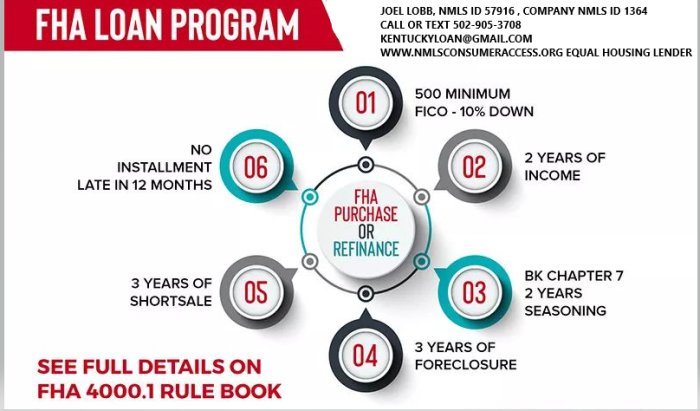
FHA Loans: The Federal Housing Administration (FHA) offers loans with more lenient credit score requirements compared to conventional loans. In Kentucky, borrowers may be eligible for an FHA loan with a credit score as low as 500, provided they can make a 10% down payment. A credit score of 580 or higher may qualify for a lower down payment option of 3.5%.
VA Loans: If you’re a veteran, active-duty service member, or eligible spouse, you may qualify for a VA loan guaranteed by the Department of Veterans Affairs. VA loans typically have more flexible credit score requirements, and some lenders may consider borrowers with credit scores below 620.
USDA Loans: The U.S. Department of Agriculture (USDA) offers loans to eligible rural and suburban homebuyers with low to moderate incomes. Credit score requirements for USDA loans in Kentucky can vary, but many lenders prefer scores of 640 or higher.
Tips for Improving Your Credit Score
If your credit score is below the desired threshold for a mortgage loan, don’t despair. There are steps you can take to improve your creditworthiness over time:
Check Your Credit Report: Obtain a free copy of your credit report from each of the three major credit bureaus—Equifax, Experian, and TransUnion—and review them for errors or discrepancies.
Pay Bills on Time: Your payment history is one of the most significant factors affecting your credit score. Make sure to pay all your bills, including credit cards, loans, and utilities, on time.
Reduce Credit Card Balances: Aim to keep your credit card balances low relative to your credit limits. High credit utilization can negatively impact your credit score.
Avoid Opening New Credit Accounts: While having a mix of credit accounts can be beneficial, opening multiple new accounts within a short period can lower your credit score.
Conclusion
In Kentucky, credit score requirements for mortgage loans can vary depending on the type of loan and lender you choose. While higher credit scores generally improve your chances of loan approval and favorable terms, there are loan programs available for borrowers with less-than-perfect credit.
Before applying for a mortgage loan, it’s essential to review your credit report, understand your credit score, and take steps to improve it if necessary. By demonstrating responsible financial behavior and maintaining a good credit history, you can increase your likelihood of securing a mortgage loan and achieving your homeownership goals in Kentucky.
Just like the gas prices at the pump, mortgage rates can change daily or throughout the day. Typically mortgage rates are published at 10-11 am daily by most lenders and you can lock up through the close of business which is usually around 6-7 PM. Mortgage rates can change up or down throughout the day based on various financial, economics, and geopolitical news in the US Financial markets and World markets. Generally speaking, good economic news is bad for rates and vice versa, bad economic news is good for mortgage rates.
The good news is this: Once you find a home and get it under contract, you can lock your mortgage loan rate. Typically it takes about 30-45 days to close a mortgage loan in Kentucky, so the typical lock is for 30-60 days. If rates get better you may be able to negotiate a better rate with your lender, but they usually have to improve by at least 25 basis points (.25) to do that. Not all lenders offer this option. The longer you lock the loan, the greater the costs. It is usually free to lock in a loan for up to 90 days without having to pay a fee.
What a lot of lenders are experiencing now is that some loans don’t close on time for various reasons. You can always extend the lock on the loan but it will costs you usually .125 basis points to do so. If you let the lock expire on the loan, then you have to take worse case pricing on that day when you go to relock. It is usually best to extend the lock on your loan.
2. What kind of Credit Score Do I need to qualify?
When applying for a mortgage loan, lenders will pull what they call a “tri-merge” credit report which will show three different fico scores from Trans union, Equifax, and Experian. The lenders will throw out the high and low score and take the “middle score” For example, if you had a 614, 610, and 629 score from the three main credit bureaus, your qualifying score would be 614. Most lenders will want at least two scores. So if you only have one score, you may not qualify. Lenders will have to pull their own credit report and scores so if you had it ran somewhere else or saw it on a website or credit card you may own, it will not matter to the lender, because they have to use their own credit report and scores. Most lenders will pull your credit report for free nowadays so this should not be a big deal as long as your scores are high enough. The Secondary Market of Mortgage loans offered by FHA, VA, USDA, Fannie Mae, and KHC all have their minimum fico score requirements and lenders will create overlays in addition to what the Government agencies will accept, so even if on paper FHA says they will go down to 580 or 500 in some cases on fico scores, very few lenders will go below the 620 threshold. If you have low fico scores it may make sense to check around with different lenders to see what their minimum fico scores are for loans. The lenders I currently deal with have the following fico cutoffs for credit scores: FHA–580 minimum score VA—-580 minimum score Fannie Mae–620 minimum score USDA–620 minimum score KHC with Down Payment Assistance –620 minimum score.
As you can see, 580-620 is the minimum score with most lenders for a FHA, VA, or Fannie Mae loan, is required for the no down payment programs offered by USDA for Kentucky for First Time Home Buyers wanting to go no money down.
3. What are the down payment requirements?
The most popular programs for Kentucky First Time Home Buyers usually involves one of the following housing programs outlined in bold below: FHA:
FHA will allow a home buyer to purchase a house with as little as 3.5% down. If your credit scores are low, say 680 and below, a lot of times it makes sense to go FHA because everyone pays the same mortgage insurance premiums no matter what your score is, and the down payment can be gifted to you. Meaning you really don’t have to have any skin into the game when it comes to down payment.
They even allow down payment assistance for down payment requirements of 3.5% through eligible parties like Kentucky Housing, Welcome Home Grants and Louisville KY and Covington Kentucky Down Payment Grants.
Lastly, FHA will allow for higher debt to income ratios with sometimes getting loan pre-approvals up to 55% of your total gross monthly income. So if you have a debt to income ratio of over 50%, Fannie Mae will not do the loan and USDA usually likes their debt to income ratios no more than 45%.
Think back to the last time you financed a purchase — be it a home, automobile, or what have you… You may remember having heard the term “debt-to-income ratio.” Today I want to spend some time going over exactly what this ratio is, and to also touch on how it can effect your personal finances.
4. What is your debt-to-income ratio?
Commonly referred to as your “DTI,” your debt-to-income ratio is a personal finance benchmark that relates your monthly debt payments to your monthly gross income. As an example… Let’s say that your gross monthly salary is $5,000 and you are spending $2,800 of it toward monthly debt payments. In that case, your DTI would be an unhealthy 56%. This version of your DTI is sometimes referred to as your “back-end” DTI. This is often broken down further to give a front-end debt-to-income ratio, which is a component of your back-end DTI.
How to calculate your front-end DTI for a Kentucky Mortgage Loan Approval
Your front-end DTI is calculated by dividing your monthly housing costs by your monthly gross income. Front-end DTI for renters is simply the amount paid in rent, whereas for homeowners it is the sum of mortgage principal, interest, property taxes, and home insurance (i.e., your PITI) divided by gross monthly income.
From above, if that $2,800 in debt payments is attributable to $1,500 in housing costs and $1,300 in non-housing costs, then your front-end DTI is $1,500/$5,000 = 30% (and your back-end ratio is still 56%, as calculated above). Fannie Mae: Fannie Mae requires just 3% down with their new Home Possible Program, but if you use their traditional mortgage loan, then 5% is the Fannie Mae Standard. Fannie Mae will go down 620 score, but if your scores are below 680, I would look seriously at the FHA loan program because Fannie Mae has steep increases to the interest rate and the mortgage insurance premiums if your scores are low. A couple of good things about Fannie Mae is that you can buy a larger priced home and have a large loan amount due to FHA only allowing most Kentucky Home Buyers a maximum mortgage loan amount of $356,000 for a max FHA loan and $545,000 for Fannie Mae Conventional loans in Kentucky for 2020. Lastly when it comes to mortgage insurance, FHA mortgage insurance premiums are for life of loan while Fannie Mae mortgage insurance premiums drop off when you develop 80% equity position in your house. But as a tell most people, nobody has a loan for 30 years, and the average mortgage is either refinanced or home sold within the first 5-7 years. VA Loans-
VA loans offer eligible Veterans and Active Duty Personnel to buy a home going no money down with no monthly mortgage insurance. This is probably the best no money down loan out there since the rates are traditionally very low on comparison to other government insured mortgages and no monthly mortgage insurance. The VA loan can be used anywhere in the state of Kentucky with the maximum VA loan limit being removed for 2021 USDA Loans-
USDA loans offer people buying a home in rural areas (typically towns of $20k or less) to buy a home going zero down. You cannot currently own another home and there is household income limits of $90,200 for a household family of four, and up to $119,300 for a household of five or more. You search USDA website for eligible areas and household income limits below at the yellow highlighted link :
KHC or Kentucky Housing- Kentucky First Time Home Buyers typically use KHC for their down payment assistance. KHC currently offers $10,000 for down payment assistance and sometimes throughout the year they will offer low mortgage rates on their mortgage revenue bond program.
The down payment assistance usually never runs out because you have to pay it back in the form of a second mortgage. It helps a lot of home buyers that want to buy in urban areas that cannot utilizer the USDA program in rural areas. Most of the time the first mortgage is a FHA loan tied with the 2nd mortgage fore down payment assistance. All KHC programs require a 620 score and rates are locked for 45 days.
5. What if I have had a bankruptcy or foreclosure in the past?
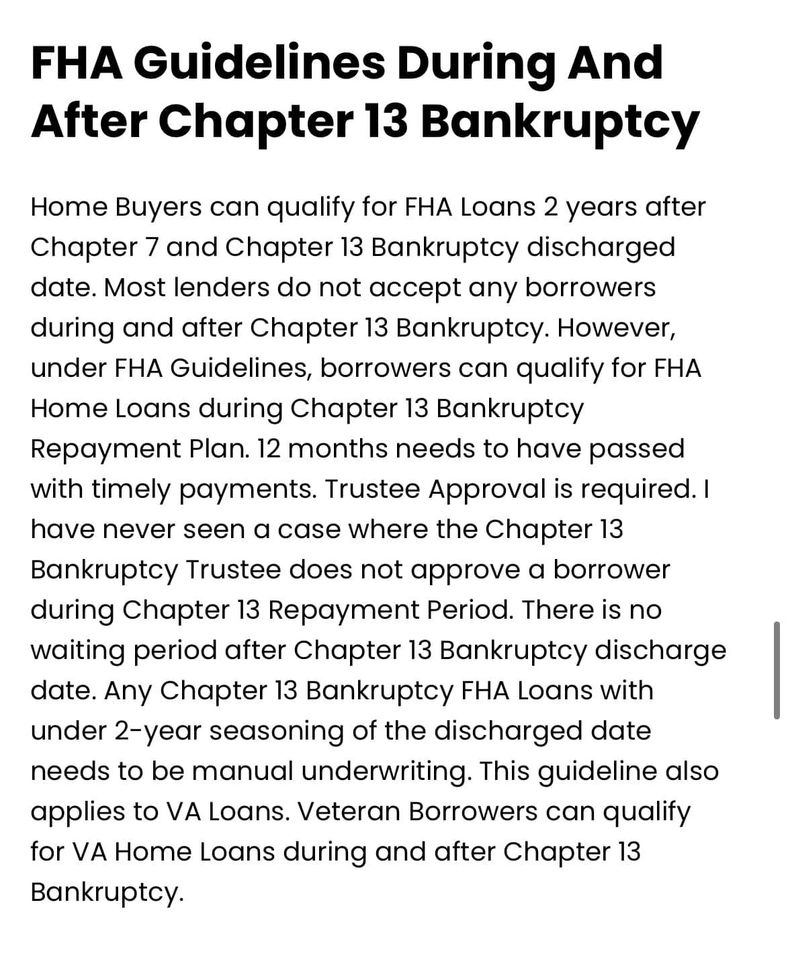
FHA and VA are the easiest on previous bankruptcies. FHA and VA both require 2 years removed from the discharge date on a Chapter 7. If you are in the middle of a Chapter 13, FHA will allow for financing with a 12 month clean history payment to the Chapter 13 courts, and with trustee permission.
VA requires 2 years removed from a foreclosure (sheriff sale date of home) and FHA requires 3 years.
USDA requires 3 years removed from both a foreclosure and bankruptcy, but on the foreclosure they do not go off the sale date. This may save you a little time if you had a previous foreclosure.
Fannie Mae (Conventional Loan)
Fannie Mae is by far the strictest. They require 4-7 years out of a foreclosure or bankruptcy
If you have questions about qualifying as first time home buyer in Kentucky, please call, text, email or fill out free prequalification below for your next mortgage loan pre-approval.
The view and opinions stated on this website belong solely to the authors, and are intended for informational purposes only. The posted information does not guarantee approval, nor does it comprise full underwriting guidelines. This does not represent being part of a government agency. The views expressed on this post are mine and do not necessarily reflect the views of my employer. Not all products or services mentioned on this site may fit all people
CONFIDENTIALITY NOTICE: This message is covered by the Electronic Communications Privacy Act, Title 18, United States Code, §§ 2510-2521. This e-mail and any attached files are deemed privileged and confidential, and are intended solely for the use of the individual(s) or entity to whom this e-mail is addressed. If you are not one of the named recipient(s) or believe that you have received this message in error, please delete this e-mail and any attached files from all locations in your computer, server, network, etc., and notify the sender IMMEDIATELY at 502-327-9770. Any other use, re-creation, dissemination, forwarding, or copying of this e-mail and any attached files is strictly prohibited and may be unlawful. Receipt by anyone other than the named recipient(s) is not a waiver of any attorney-client, work product, or other applicable privilege. E-mail is an informal method of communication and is subject to possible data corruption, either accidentally or intentionally. Therefore, it is normally inappropriate to rely on legal advice contained in an e-mail without obtaining further confirmation of said advice.
The type of mortgage you’re applying for determines the minimum requirements you’ll have to meet for your down payment, credit score, and debt-to-income ratio.
Find out what type of loan you might qualify for or what aspects of your finances you’ll need to improve to get a better shot at qualifying for a mortgage.
Loan Type
Min. Down Payment
Min. Credit Score
Max DTI
Property Type
Conventional
3%
620
45%
Primary, secondary, investment
VA
0%
none
none
Primary
FHA
3.5%
500
50%
Primary
USDA
0%
none
41%
Primary
Keep in mind: The minimum down payment, minimum credit score, and maximum DTI shown in the table apply to mortgages used to purchase a primary residence. While you can use a conventional loan or a jumbo loan to purchase a home for another purpose, you might need a larger down payment, a higher credit score, more cash reserves, or all three.
Credit score needed to buy a house
Mortgage lending is risky, and lenders want a way to quantify that risk. They use your three-digit credit score to gauge the risk of loaning you money since your credit score helps predict your likelihood of paying back a loan on time. Lenders also consider other data, such as your income, employment, debts and assets to decide whether to offer you a loan.
Different lenders and loan types have different borrower requirements, loan terms and minimum credit scores. Here are the requirements for some of the most common types of mortgages.
Conventional loan
Minimum credit score: 620
A conventional loan is a mortgage that isn’t backed by a federal agency. Most mortgage lenders offer conventional loans, and many lenders sell these loans to Fannie Mae or Freddie Mac — two government-sponsored enterprises. Conventional loans can have either fixed or adjustable rates, and terms ranging from 10 to 30 years.
You can get a conventional loan with a down payment as low as 3% of the home’s purchase price, so this type of loan makes sense if you don’t have enough for a traditional down payment. However, if your down payment is less than 20%, you’re required to pay for private mortgage insurance (PMI), which is an insurance policy designed to protect the lender if you stop making payments. You can ask your servicer to cancel PMI once the principal balance of your mortgage falls below 80% of the original value of your home.
FHA loan
Minimum credit score (10% down): 500
Minimum credit score (3.5% down): 580
FHA loans are backed by the Federal Housing Administration (FHA), a part of the U.S. Department of Housing and Urban Development (HUD). The FHA incentivizes lenders to make mortgage loans available to borrowers who might not otherwise qualify by guaranteeing the federal government will repay the mortgage if the borrower stops making payments. This makes an FHA loan a good option if you have a lower credit score.
FHA loans come in 15- or 30-year terms with fixed interest rates. Unlike conventional mortgages, which only require PMI for borrowers with less than 20% down, all FHA borrowers must pay an up-front mortgage insurance premium (MIP) and an annual MIP, as long as the loan is outstanding.
VA loan
Minimum credit score: N/A
VA loans are mortgages backed by the U.S. Department of Veterans Affairs (VA). The VA guarantees loans made by VA-approved lenders to qualifying veterans or service members of the U.S. armed forces, or their spouses. This type of loan is a great option for veterans and their spouses, especially if they don’t have the best credit and don’t have enough for a down payment.
VA loans are fixed-rate mortgages with 10-, 15-, 20- or 30-year terms.
Most VA loans don’t require a down payment or monthly mortgage insurance premiums. However, they do require a one-time VA funding fee, that ranges from 1.4% to 3.6% of the loan amount.
USDA loan
Minimum credit score: N/A
The U.S. Department of Agriculture guarantees loans for borrowers interested in buying homes in certain rural areas. USDA loans don’t require a minimum down payment, but you have to meet the USDA’s income eligibility limits, which vary by location.
All USDA mortgages have fixed interest rates and 30-year repayment terms.
USDA-approved lenders must pay an up-front guarantee fee of up to 3.5% of the purchase price to the USDA. That fee can be passed on to borrowers and financed into the home loan. If the home you want to buy is within an eligible rural area (defined by the USDA) and you meet the other requirements, this could be a great loan option for you.
What else do mortgage lenders consider?
Your credit score isn’t the only factor lenders consider when reviewing your loan application. Here are some of the other factors lenders use when deciding whether to give you a mortgage.
Debt-to-income ratio — Your debt-to-income (DTI) ratio is the amount of debt payments you make each month (including your mortgage payments) relative to your gross monthly income. For example, if your mortgage payments, car loan and credit card payments add up to $1,800 per month and you have a $6,000 monthly income, your debt-to-income ratio would be $1,800/$6,000, or 30%. Most conventional mortgages require a DTI ratio no greater than 36%. However, you may be approved with a DTI up to 45% if you meet other requirements.
Employment history — When you apply for a mortgage, lenders will ask for proof of employment — typically two years’ worth of W-2s and tax returns, as well as your two most recent pay stubs. Lenders prefer to work with people who have stable employment and consistent income.
Down payment — Putting money down to buy a home gives you immediate equity in the home and helps to ensure the lender recoups their loss if you stop making payments and they need to foreclose on the home. Most loans — other than VA and USDA loans — require a down payment of at least 3%, although a higher down payment could help you qualify for a lower interest rate or make up for other less-than-ideal aspects of your mortgage application.
The home’s value and condition — Lenders want to ensure the home collateralizing the loan is in good condition and worth what you’re paying for it. Typically, they’ll require an appraisal to determine the home’s value and may also require a home inspection to ensure there aren’t any unknown issues with the property.
The Federal Housing Administration (FHA) Mortgagee Letter (ML) 22-17 announced that FHA’s Technology Open To Approved Lenders (TOTAL) Mortgage Scorecard will begin scoring a borrower’s positive rental payment history as part of the credit risk analysis when they are applying for FHA-insured financing.
TOTAL will begin scoring on or after October 30, 2022, as well as for case numbers assigned on or after September 20, 2021, allowing lenders to implement the guidance on existing pipeline cases without the need to obtain a new case number.







 Kentucky FHA Mortgage Lender