- FHA – 620+ Min Fico Approve Eligible / NO OVERLAYS-NONE!
- FHA – 620+ FICO for PURCH, RT, C/O including Flips & High Balance
- FHA – 640+ REFERS OK!—no overlays -u/w directly to 4000.1
- FHA – 640+ MANUALS up to 50% DTI (with 2 comp factors)
- FHA – 620+ No DTI CAP – Follow AUS Findings!!! (with approved eligible)
- FHA – 620+ NO Minimum Credit History or Trades with AUS Approval!
- FHA – 620+ – No VOR Unless Required by DU Findings!
- FHA – Transfer appraisals from ANY lender/AMC OK!
- FHA – ORDER YOUR APPRAISAL FROM 20+ AMCs YOU CHOOSE!
- FHA – Collections – HUD Guides Apply –
- FHA – Mortgage Lates OK if AUS Approved!!!
- FHA – ESCROW STATE – Non Purchasing Spouse derogs ignored – only affects DTI
- FHA – Borrower w/ Work Permits, Non-Resident Alien OK!
- FHA – 1 Day off Market for Cashout Refi! – Must be off market before date of loan application!
- FHA – Rental Income on 2-4 units ok FTHB
- FHA – STREAMLINE – 620 Minimum
- FHA – Streamline – 620 Score – No Appraisal, No Income, No AVM, No Credit Qualifying!!!
- FHA – Streamline -Investment and 2nd Homes OK!
- FHA – Streamline – Mtg only on subject property only!
What is an FHA Loan and Is It Right for You?
Source: What is an FHA Loan and Is It Right for You?
What Is An FHA Loan And Is It Right For You?
The Federal Housing Administration insures what are called FHA loans. These mortgage loans provide opportunities for buyers with less-than-perfect credit or limited down payments to purchase homes, but they aren’t without potential pitfalls.
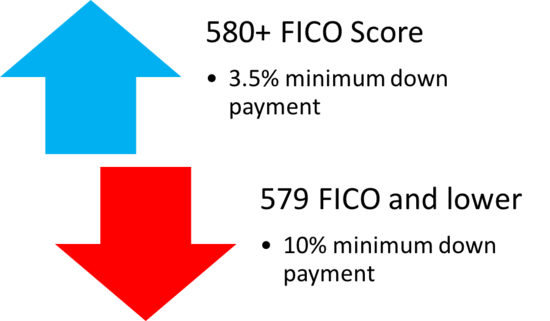
FHA loans are available to borrowers with a credit score of at least 580, and you have to make a minimum 3.5% down payment. They’re a popular option for first-time home buyers.
Lenders such as banks and credit unions issue the mortgages, which are insured by the FHA. That protects the lender if the borrower defaults, which is why the terms are more favorable than a traditional mortgage.
Around eight million single-family homes have loans insured by the FHA.
What Can an FHA Loan be Used For?
You can use an FHA loan to refinance single-family houses, to buy a single-family home, to buy some multifamily homes and condos and certain mobile and manufactured homes. There are particular types of FHA loans that can be used to renovate an existing property or for new construction.
How is an FHA Loan Different from a Conventional Mortgage Loan?
The biggest differentiator between an FHA loan and a conventional mortgage is that it’s easier to qualify for an FHA loan. You may get a loan with a lower credit score than you would otherwise, and your mortgage insurance payments may be lower too.
There are also fewer restrictions as far as using gifts from family or donations for your down payment.
If you have a FICO score of at least 580, you have to make a 3.5% down payment. With a FICO score between 500 and 579, you’re required to make a 10% down payment, and mortgage insurance is required. Your debt-to-income ratio needs to be less than 43% whereas with a conventional loan it’s usually 36%. You do need to have proof of income and steady employment, as you would need with a conventional loan.
Are There FHA Loan Limits?
There are limits on the mortgage amount you can get with an FHA-guaranteed loan. The limits vary based on your county, and in 2020 these ranged from $331,760 to $765,600. The limit amounts are updated by the FHA each year based on fluctuations in home prices.
The Benefits of the FHA Loan
The primary benefits of an FHA loan are that buyers who wouldn’t otherwise qualify may be able to own a home and for a lower down payment. Sometimes the FHA will help facilitate coverage of closing costs. If you have problems making payments on an FHA loan you may be eligible for a forbearance period if you qualify.
What Are the Downsides of an FHA Loan?
You will have to pay an upfront mortgage insurance premium with an FHA loan to protect the lender. The fee is due when you close and it’s 1.75% of your loan. You will also have to pay an annual mortgage insurance premium for the life of your loan. The amount can range between 0.45% and 1.05%.
When you buy a home with an FHA loan, it has to meet strict standards in terms of health and safety.
Also, while there are set standards from the FHA, approved lenders can create their own requirements.
Applying for an FHA Loan
You’ll have to first find an FHA-approved lender to get one of these home loans. You’ll need some documents, including proof of U.S. citizenship, legal permanent residency, or eligibility to work in America. You’ll need bank statements for at least the past 30 days, and you’ll probably need to show pay stubs.
Some of the information your lender may be able to obtain on your behalf, such as your credit reports, tax returns and employment records.
There are advantages to an FHA loan because it expands homeownership to more people than conventional loans. It’s just important that if you’re considering this loan you understand the costs and that you’re not taking on more than you’re financially prepared for because of the less stringent approval requirements.
Written by Ashley Sutphin for http://www.RealtyTimes.com Copyright © 2020 Realty Times All Rights Reserved.
How does Kentucky FHA Mortgage Rates work?
Kentucky FHA mortgage loans are backed by the Federal Housing Administration under the umbrella of HUD. FHA loans were developed to help borrowers that don’t have a large down payment and a weaker credit profile to buy and refinance their home mortgage loan.
Kentucky FHA rates are backed by the government, so they are typically lower than other mortgage rates in the secondary market like Conventional loans and portfolio loans at banks, but fall in line compatible to other backed government loans in the secondary market likeUSDA, VA, mortgage loans. Most people seeking FHA mortgages will get a 30 year, 20 year of 15 year fixed rate loan with the security of the house payment not changing.
Lower Credit Standards and Credit Scores for FHA loans
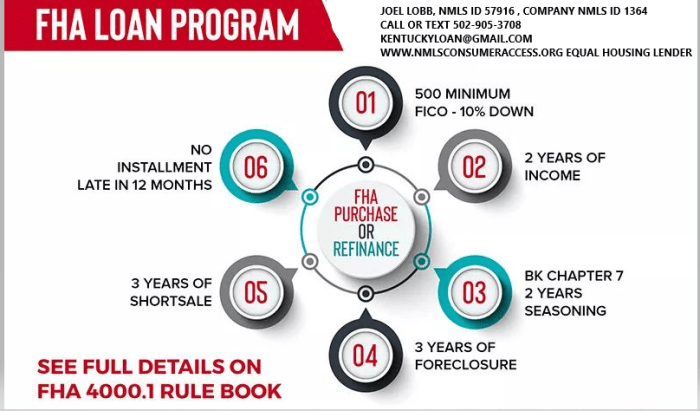
FHA mortgages will go down to a 500 credit score with at least 10% down payment, and if your credit score is higher than 580, you can put the minimum of 3.5% down payment. Additionally, you need to be only 2 years removed from a Chapter 7 bankruptcy, or 1 year from a Chapter 13 bankruptcy.
Mortgage Insurance on FHA loans
Mortgage insurance is required on most FHA loans and is usually for life of loan with everyone paying the same. If you have a higher credit score and a larger down payment, it would make sense to look at doing a conventional mortgage loan because they are based on your credit score, money down, and debt to income ratio and not for life of loan.
You can get a lower FHA mortgage insurance premium and not have to finance the premiums for life of the loan if you put more than 10% down payment and finance on a 15 year term.
Why would you consider a FHA mortgage?
My best opinion is this. If you have a bankruptcy that is less than 4 years, have a credit score lower than 660, and very little money down, I would recommend at looking to do a FHA mortgage Loan. Your chances of getting approved with likely result in a loan approval as opposed to doing a conventional loan backed by Fannie Mae.
Why would you consider a Conventional Loan?
My best opinion is this. If you have a bankruptcy over 4 years or longer, at least 5% down payment, a credit score of 680 or higher, I would look doing a conventional mortgage loan.
I can help you understand what mortgage is correct for you. Please contact me below and I will be happy to answer any questions.
Senior Loan Officer
Disclaimer: No statement on this site is a commitment to make a loan. Loans are subject to borrower qualifications, including income, property evaluation, sufficient equity in the home to meet Loan-to-Value requirements, and final credit approval. Approvals are subject to underwriting guidelines, interest rates, and program guidelines and are subject to change without notice based on applicant’s eligibility and market conditions. Refinancing an existing loan may result in total finance charges being higher over the life of a loan. Reduction in payments may reflect a longer loan term. Terms of any loan may be subject to payment of points and fees by the applicant Equal Opportunity Lender. NMLS#57916http://www.nmlsconsumeraccess.org/
How to Ditch FHA Mortgage Insurance Premiums
Originally Posted On: https://thelindleyteam.com/how-to-ditch-fha-mortgage-insurance-premiums/ When you get a mortgage, you’re signing a million sheets of paper and agreeing to pay a lot…
Source: How to Ditch FHA Mortgage Insurance Premiums
When you get a mortgage, you’re signing a million sheets of paper and agreeing to pay a lot of things that you may not understand at the time. Closing costs, down payments, inspections, real estate agent fees, home insurance, escrow, and so on and so forth. One of the numbers that may have gotten rolled into that list is mortgage insurance premiums.
If you got an FHA loan, you’re almost certainly paying FHA mortgage insurance premiums. Read on to learn more about what these are, how much you might be paying each month, and how you can get out from under them.
What Are FHA Mortgage Insurance Premiums?
Before the Federal Housing Administration was founded, in order to qualify to buy a house, mortgage applicants had to have excellent credit and a large down payment. This made it harder for people to buy homes, so the FHA was established to make this process easier for first-time homebuyers. The FHA does not actually give loans they just insure them.
Mortgage insurance is a policy that protects your lender in case you default on your loan. It allows lenders to make higher-risk loans without worrying about losing money. You pay the premiums for that insurance policy as a part of your agreement with the loan.
Mortgage Insurance Rates
If your loan was $625,000 or less and you got a thirty-year fixed-rate mortgage and you paid less than 5 percent on a down payment, you’ll have an annual mortgage insurance premium of 0.85 percent of your loan. If you put down more than 5 but less than 10 percent, you’ll pay 0.8 percent for the life of the loan. If you put down more than 10 percent, you’ll pay 0.8 percent for the first eleven years of the loan
For loans less than $625,000 with a fifteen-year fixed-rate note where you paid less than 10 percent down, you’ll pay 0.7 percent of your loan amount every year for the life of the loan. If you paid more than 10 percent, you’ll pay 0.45 percent every year for the first eleven years.
If you have a mortgage greater than $625,000 with a thirty-year fixed-rate loan and you paid less than 10 percent down, you’ll pay 1 percent of your mortgage every year for the life of the loan. If you paid more than 10 percent down, you’ll pay a slightly higher 1.05 percent, but only for the first eleven years.
And finally, if your loan is greater than $625,000, you have a 15-year fixed-rate mortgage, and you paid less than ten percent down, you’ll pay 0.95 percent of your loan every year for the life of the loan. If you paid more than 10 percent but less than 22 percent, you’ll pay 0.7 percent for the first eleven years of the loan. And if you paid more than 22 percent, you’ll pay 0.45 percent every year for the first eleven years.
How to Get Out of Mortgage Insurance
The good news is that you aren’t stuck forever. Once you get about 20 percent equity in your house, either through improvements or paying down the loan, you can refinance your mortgage. With that 20 percent, you should be able to get a mortgage that doesn’t require FHA protection.
Even if you don’t yet have 20 percent equity in the house, you may be able to refinance into a lower mortgage insurance premium bracket. If you can get 10 percent to put down on your new mortgage, for instance, you may be able to drop to a lower monthly percentage that you’re paying.
Reappraise
Depending on where you live and what work you’ve done on the house, you may be able to get 20 percent equity without having to pay all that money in. If property values in your area are on the rise, your home may be worth more now than when you bought it. The same goes for home improvements, and that total may leave you with more than 20 percent equity in your home so you can refinance out of your mortgage insurance.
A great way to determine if this is the case for you is to have your home appraised again. A home appraisal will cost somewhere between $300 and $400. If you’re paying $520 a month for mortgage insurance premiums (1 percent on a $625,000 loan), this will pay for itself immediately.
How to Refinance
Once you get 20 percent equity in your house, no matter how you do it, you can refinance into a new mortgage. Start by shopping around and applying for a new mortgage with three or four lenders. This will give you an idea of what sort of interest rates you’re looking at and what your new monthly payment should be.
Once you find a lender you like, lock in your interest rate and start on the process of getting the loan closed. You’ll need a fair amount of paperwork for both the application and closing processes. Your last several pay stubs, tax returns, credit reports, and statements of your assets and outstanding debts are a good place to start.
What are the requirements to qualify for a Kentucky FHA Mortgage?
What are the requirements to qualify for a Kentucky FHA Mortgage in 2020?
Kentucky FHA loan is a mortgage that is insured by the Government agency under Housing and Urban Development that is called FHA or short for Federal Housing Administration. The loan was established for Kentucky Home buyers will very little or no money down home loans with more lenient credit score and income requirements and tends to be more forgiving about credit history with regard to bankruptcy and foreclosures, higher debt to income ratios and job history with limited work history for home buyers will only 2 years work history or less.
Kentucky FHA Credit Score Requirements and Down Payment Requirements
The Kentucky FHA home loan program may accept credit scores as low as 580 and require at least a 3.5 percent down payment of the sales price on a purchase. If you have a credit score below 580, then a 10 percent down payment or more may be acceptable some FHA lenders in Kentucky , providing you meet all program guidelines in regards to debt to income ratios, assets, and income requirements . The loan cannot be used for rental properties and does allow for co-signers if they are related.
Remember, these guidelines are set forth by FHA and all lenders do not have to offer these guidelines, to whereas they may a higher credit score or more money down or income restrictions on how much you can qualify for.
Kentucky FHA Mortgage Loans and Bankruptcy or Foreclosure
In case you had a blemish on your credit report with a bankruptcy, short sale or foreclosure, follow these guidelines.
Kentucky FHA loans requires a passage of two years since the discharge date of a chapter 7 bankruptcy. A chapter 13 bankruptcy may be acceptable after at least 12 months of an on time pay-back period and the borrower has received permission from bankruptcy court to enter the mortgage transaction, and you qualify with the new house payment along with other debts on the credit report.
Three years must pass if you went through a short sale or foreclosure. The date starts when the home was sold, not when you entered the transaction toward foreclosure or short sale period. Sometimes the house will not sell to 1-2 years later after the foreclosure and this is when the passage date starts. Keep this in mind on your next FHA loan pre-approval if you have had a bankruptcy or foreclosure in the past.
Kentucky FHA Loans and Mortgage Insurance
FHA loans have two forms of mortgage insurance which protects the lender for any losses suffered if the borrower defaults on the payment. ne is called upfront mortgage insurance premium (UFMIP) which has a rate of 1.75% of the loan amount. The fee can be added to the loan amount or paid in full as part of your closing costs. In addition, FHA loans also have a 0.8-0.85% (of the loan amount) monthly mortgage insurance. In most cases, this mortgage insurance remains for the life of the loan. To eliminate the mortgage insurance, the borrower must refinance the loan into a non-FHA loan program and have 20% equity in the property.
In addition to the down payment requirements on a FHA loan, they’re closing costs and prepaids to pay at closing. The seller can contribute up to 6% of the sales price to help the buyer with closing costs and prepaid expenses. Closing costs vary from lender to lender and your prepaids would be the same no matter which lender you choose because this is a function of the property ‘s home insurance premium quote you obtain and the property tax bill on the home set by PVA.
Sometimes the lender can pay a credit toward these expenses at closing with a lender credit which lets the lender credit back to you with a higher rate to reduce the costs of the loan’s costs at closing for out of pocket expenses.
All Kentucky FHA loans are assumable, which means that when the homeowner sells a home, the buyer may be able to take on the existing loan and terms (e.g.: balance, rate and remaining loan amount). Of course, anyone interested in the assumable loan feature must go through the approval process (credit check, income verification) with the current lender on the property. This is a very rare occurrence because most sellers are going to sell the home for more than they owe on it.

The view and opinions stated on this website belong solely to the authors, and are intended for informational purposes only. The posted information does not guarantee approval, nor does it comprise full underwriting guidelines. This does not represent being part of a government agency. The views expressed on this post are mine and do not necessarily reflect the view of my employer. Not all products or services mentioned on this site may fit all people. NMLS ID# 57916, (www.nmlsconsumeraccess.org). USDA Mortgage loans only offered in Kentucky.
All loans and lines are subject to credit approval, verification, and collateral evaluation
How to qualify for a Kentucky FHA Home Loan ?
It’s important to understand the different types of loan programs available to you and what benefits and drawbacks there are to each type.
For example, if you’re looking to find a fixer upper this may not be the right loan program for you. But an FHA loan may be a better fit for you if you have little cash saved up for a down payment or if you don’t have a high credit score.
Kentucky FHA loan requirements:
- At least 18 years old to apply
- No age limit. just must be 18 years of age to apply.
- Must occupy the home as a primary residence, no rental homes or investment property
- An appraisal must be done by an FHA-approved appraiser.Typically FHA appraisal in Kentucky costs anywhere from low-end $325 to $525 with most FHA lenders in KY.
- Home inspection is not required
- Termite inspection not required
- 2 years removed from Chapter 7 bankruptcy, and 1 year in Chapter 13 bankruptcy is possible to get a loan while in bankruptcy
- Foreclosure or short sale on previous home mortgage requires 3 years removal from those dates.
- Mortgage insurance (MIP) is required
- Upfront Mortgage Insurance Premium is 1.75% and monthly mortgage insurance is .85% or .80% depending on loan term and loan to value.
- Mortgage insurance is for life of loan.
- No matter your credit scores, everyone pays the same mortgage insurance premiums.
- Must have 2 years of employment history proving a reliable source of income
- 500 FICO score requirement with at least 10% down payment
- 580 FICO score requirement with at least 3.5% down payment
- Gifts and down payment assistance programs are allowed to meet your down payment requirements. Cannot come from seller, but seller can contribute up to 6% of the sales price toward buyer’s closing costs and prepaids.
- Student loan payments are factored into the debt-to-income ratio when applying. Typically if loans are deferred, or in an income=based repayment plan, the FHA underwriters will use 1% of the outstanding balance, which sometimes can make it difficult to qualify.
- Your debt-to-income ratio must not be higher than 31% or total debt obligation cannot be higher than 43% of your current income. This is for a manual underwriter, meaning that if the AUS underwriting system by mortgage lenders will approve you for a higher debt to income ratio, that is fine.
Senior Loan Officer
If you are an individual with disabilities who needs accommodation, or you are having difficulty using our website to apply for a loan, please contact us at 502-905-3708.
Disclaimer: No statement on this site is a commitment to make a loan. Loans are subject to borrower qualifications, including income, property evaluation, sufficient equity in the home to meet Loan-to-Value requirements, and final credit approval. Approvals are subject to underwriting guidelines, interest rates, and program guidelines and are subject to change without notice based on applicant’s eligibility and market conditions. Refinancing an existing loan may result in total finance charges being higher over the life of a loan. Reduction in payments may reflect a longer loan term. Terms of any loan may be subject to payment of points and fees by the applicant Equal Opportunity Lender. NMLS#57916http://www.nmlsconsumeraccess.org/
— Some products and services may not be available in all states. Credit and collateral are subject to approval. Terms and conditions apply. This is not a commitment to lend. Programs, rates, terms and conditions are subject to change without notice. The content in this marketing advertisement has not been approved, reviewed, sponsored or endorsed by any department or government agency. Rates are subject to change and are subject to borrower(s) qualification.
![]() |
Student Loans In Collections, What Can I Do to get Approved For A Kentucky Mortgage ?
|
|
HUD down payment assistance on Kentucky FHA mortgages
The Department of Housing and Urban Development announced this week that it is issuing new rules for down payment assistance on mortgages insured by the Federal Housing Administration. Click the headline for a full breakdown of which rules are changing and why.
Source: HUD announces new rules for down payment assistance on FHA mortgages
The new rules are laid out in an FHA mortgagee letter titled “Downpayment Assistance and Operating in a Governmental Capacity.”
According to HUD, this “clarification” of the current documentation rules “should assist mortgagees in determining whether governmental entities providing gifts or secondary financing, or both, towards borrowers’ MRI are doing so consistent with FHA requirements.”
As the FHA states in its mortgagee letter, the current FHA handbook requires mortgagees to confirm that a “governmental entity is operating in its governmental capacity but, except for requiring a source of funds letter, does not specify the necessary documentation that demonstrates support for such a conclusion.”
According to HUD, that lack of “necessary documentation” is leading to some unnamed “entities” skirting the rules.
“It has come to FHA’s attention that certain Governmental Entities may be acting beyond the scope of any inherent or granted governmental authority in providing funds towards the Borrower’s MRI in circumstances that would violate Handbook 4000.1, the National Housing Act, and is contrary to established law,” the FHA said in the mortgagee letter.
In order to remedy this situation, the FHA is now stating that its current documentation requirements need to be “clarified to provide Mortgagees with specific guidance regarding documentation that will give greater assurances that the standards for providing the MRI have been satisfied by the Governmental Entity.”
According to HUD and the FHA, the new rules took effect on April 18, 2019.
To read HUD’s announcement of the rule change, click here.
And for a full look at how the rules are actually changing and what documentation will now be required, click here.
Joel Lobb
Mortgage Loan Officer
Individual NMLS ID #57916
American Mortgage Solutions, Inc.
10602 Timberwood Circle
Text/call: 502-905-3708
email: kentuckyloan@gmail.com
https://www.mylouisvillekentuckymortgage.com/
FHA eliminates two unnecessary and outdated lending roadblocks
The Federal Housing Administration has taken steps to reduce some of the regulatory burdens that belabor the lending process, releasing two mortgagee letters Tuesday with updated guidelines on home warranty and inspection requirements for single-family FHA loans. FHA Commissioner Brian Montgomery said the moves align with the administration’s goal streamline and update guidelines in an effort to reduce regulatory barriers.
Source: FHA eliminates two unnecessary and outdated lending roadblocks
How to get rid of Mortgage Insurance on a Kentucky Mortgage Loan.
Disclaimer: No statement on this site is a commitment to make a loan. Loans are subject to borrower qualifications, including income, property evaluation, sufficient equity in the home to meet Loan-to-Value requirements, and final credit approval. Approvals are subject to underwriting guidelines, interest rates, and program guidelines and are subject to change without notice based on applicant’s eligibility and market conditions. Refinancing an existing loan may result in total finance charges being higher over the life of a loan. Reduction in payments may reflect a longer loan term. Terms of any loan may be subject to payment of points and fees by the applicant Equal Opportunity Lender. NMLS#57916http://www.nmlsconsumeraccess.org/
— Some products and services may not be available in all states. Credit and collateral are subject to approval. Terms and conditions apply. This is not a commitment to lend. Programs, rates, terms and conditions are subject to change without notice. The content in this marketing advertisement has not been approved, reviewed, sponsored or endorsed by any department or government agency. Rates are subject to change and are subject to borrower(s) qualification.
KENTUCKY HUD HOMES FOR SALE

FHA’s $100 Down Program is allowed for Kentucky Home Buyers buying a home that is owned by HUD or FHA. The $100 Down sales incentive permits a Borrower to purchase a HUD REO Property with FHA-insured financing with a minimum downpayment of $100.
This program can ONLY be used to purchase homes owned by HUD OR FHA.
Check the link below to see if any properties are offered in your area. If a property is eligible, the listing on the website will specify $100 Down Financing Incentivize.
You can find all current listings for sale by HUD here.

The main factors in qualifying for this Kentucky FHA program are that the property must be a HUD REO property and purchased using FHA Financing, aside from these, the requirements include:
- Occupancy: The property must be purchased for use as your Primary Residence.
- Property Type: Eligible properties include 1 or 2 unit homes, manufactured homes, condos, and PUDs.
- Full Price Offer: You must submit an offer for the full listing price. Typically, when you purchase a home, you make an offer to the seller…. we all want to get the best deal so you may offer less than the asking price… or you may offer more if the home you want is being bid on by many buyers…. With HUD REO properties this is not allowed. The sales price HUD has on the listing is what you must offer.
- Sales Contract: The $100 down payment incentive must be included on the executed sales contract.
- Cannot have purchased a HUD home within the preceding 24 months
- Credit Score: 580 is the minimum FICO score you must have to qualify for a FHA Kentucky Home Buyer using the HUD $100 Down loan program.
- Usually takes about 30-45 days to close
- Earnest Money Deposit usually needs to be at least $500 to $1000
- This is a manual underwriter meaning that your debt to income ratio has to be 31 and 43% respectively
- No Chapter 7 Bankruptcies in last two years
- No Foreclosures in last 3 years
- Clear Cavirs on borrowers.
|
||||||||||||||||||||||||||||||||||||||||||||||||||||||||||||||||||||||||||||||||||||||||||||||||||||||||||||||||||||||||||||||||||||||||||||||||||||||||||||||||||||||||||||||||||||||||||||||||||||||||||||||||||||||||||||||||||||||||||||||||||||||||||||||
|
||||||||||||||||||||||||||||||||||||||||||||||||||||||||||||||||||||||||||||||||||||||||||||||||||||||||||||||||||||||||||||||||||||||||||||||||||||||||||||||||||||||||||||||||||||||||||||||||||||||||||||||||||||||||||||||||||||||||||||||||||||||||||||||
|
||||||||||||||||||||||||||||||||||||||||||||||||||||||||||||||||||||||||||||||||||||||||||||||||||||||||||||||||||||||||||||||||||||||||||||||||||||||||||||||||||||||||||||||||||||||||||||||||||||||||||||||||||||||||||||||||||||||||||||||||||||||||||||||
|
|
|
|