- FHA – 620+ Min Fico Approve Eligible / NO OVERLAYS-NONE!
- FHA – 620+ FICO for PURCH, RT, C/O including Flips & High Balance
- FHA – 640+ REFERS OK!—no overlays -u/w directly to 4000.1
- FHA – 640+ MANUALS up to 50% DTI (with 2 comp factors)
- FHA – 620+ No DTI CAP – Follow AUS Findings!!! (with approved eligible)
- FHA – 620+ NO Minimum Credit History or Trades with AUS Approval!
- FHA – 620+ – No VOR Unless Required by DU Findings!
- FHA – Transfer appraisals from ANY lender/AMC OK!
- FHA – ORDER YOUR APPRAISAL FROM 20+ AMCs YOU CHOOSE!
- FHA – Collections – HUD Guides Apply –
- FHA – Mortgage Lates OK if AUS Approved!!!
- FHA – ESCROW STATE – Non Purchasing Spouse derogs ignored – only affects DTI
- FHA – Borrower w/ Work Permits, Non-Resident Alien OK!
- FHA – 1 Day off Market for Cashout Refi! – Must be off market before date of loan application!
- FHA – Rental Income on 2-4 units ok FTHB
- FHA – STREAMLINE – 620 Minimum
- FHA – Streamline – 620 Score – No Appraisal, No Income, No AVM, No Credit Qualifying!!!
- FHA – Streamline -Investment and 2nd Homes OK!
- FHA – Streamline – Mtg only on subject property only!
How does Kentucky FHA Mortgage Rates work?
Kentucky FHA mortgage loans are backed by the Federal Housing Administration under the umbrella of HUD. FHA loans were developed to help borrowers that don’t have a large down payment and a weaker credit profile to buy and refinance their home mortgage loan.
Kentucky FHA rates are backed by the government, so they are typically lower than other mortgage rates in the secondary market like Conventional loans and portfolio loans at banks, but fall in line compatible to other backed government loans in the secondary market likeUSDA, VA, mortgage loans. Most people seeking FHA mortgages will get a 30 year, 20 year of 15 year fixed rate loan with the security of the house payment not changing.
Lower Credit Standards and Credit Scores for FHA loans
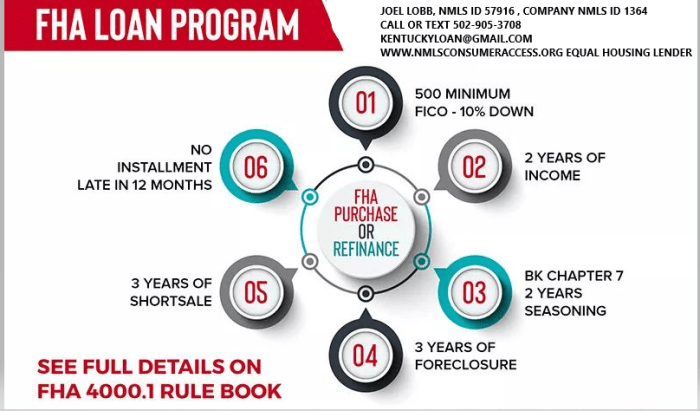
FHA mortgages will go down to a 500 credit score with at least 10% down payment, and if your credit score is higher than 580, you can put the minimum of 3.5% down payment. Additionally, you need to be only 2 years removed from a Chapter 7 bankruptcy, or 1 year from a Chapter 13 bankruptcy.
Mortgage Insurance on FHA loans
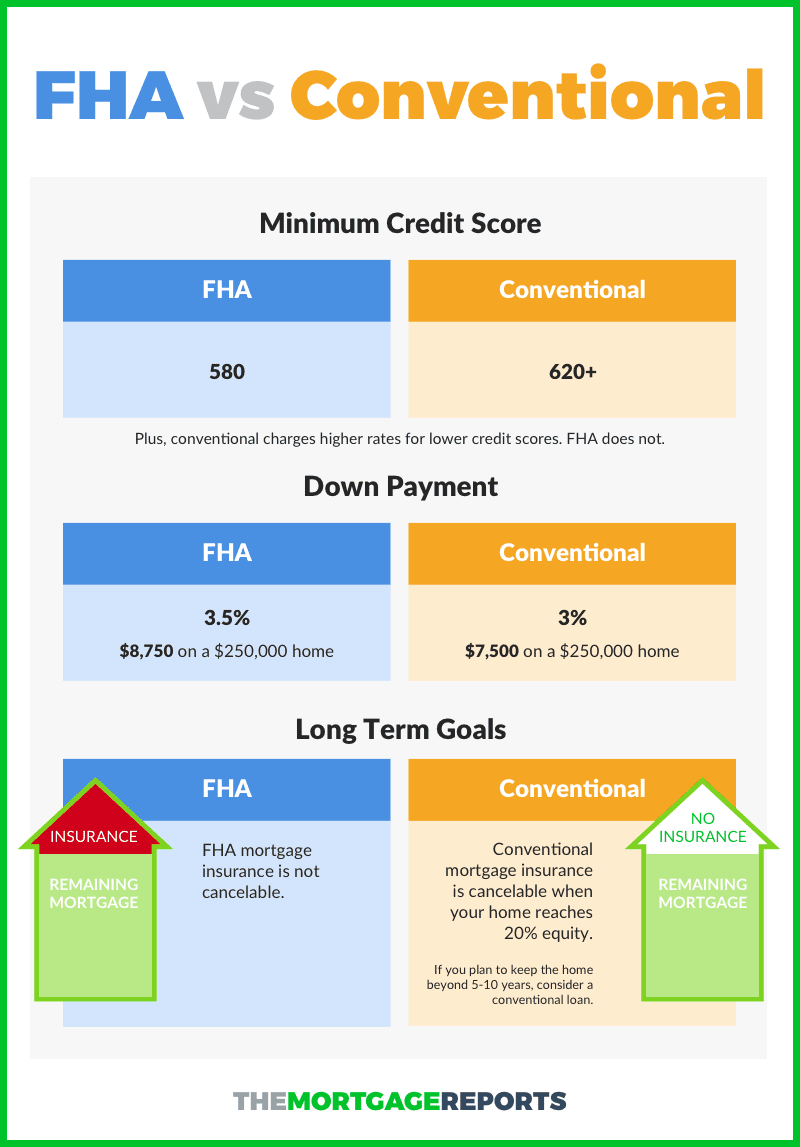
Mortgage insurance is required on most FHA loans and is usually for life of loan with everyone paying the same. If you have a higher credit score and a larger down payment, it would make sense to look at doing a conventional mortgage loan because they are based on your credit score, money down, and debt to income ratio and not for life of loan.
You can get a lower FHA mortgage insurance premium and not have to finance the premiums for life of the loan if you put more than 10% down payment and finance on a 15 year term.
Why would you consider a FHA mortgage?
My best opinion is this. If you have a bankruptcy that is less than 4 years, have a credit score lower than 660, and very little money down, I would recommend at looking to do a FHA mortgage Loan. Your chances of getting approved with likely result in a loan approval as opposed to doing a conventional loan backed by Fannie Mae.
Why would you consider a Conventional Loan?
My best opinion is this. If you have a bankruptcy over 4 years or longer, at least 5% down payment, a credit score of 680 or higher, I would look doing a conventional mortgage loan.
I can help you understand what mortgage is correct for you. Please contact me below and I will be happy to answer any questions.
Senior Loan Officer
Disclaimer: No statement on this site is a commitment to make a loan. Loans are subject to borrower qualifications, including income, property evaluation, sufficient equity in the home to meet Loan-to-Value requirements, and final credit approval. Approvals are subject to underwriting guidelines, interest rates, and program guidelines and are subject to change without notice based on applicant’s eligibility and market conditions. Refinancing an existing loan may result in total finance charges being higher over the life of a loan. Reduction in payments may reflect a longer loan term. Terms of any loan may be subject to payment of points and fees by the applicant Equal Opportunity Lender. NMLS#57916http://www.nmlsconsumeraccess.org/
What are the requirements to qualify for a Kentucky FHA Mortgage?
What are the requirements to qualify for a Kentucky FHA Mortgage in 2020?
Kentucky FHA loan is a mortgage that is insured by the Government agency under Housing and Urban Development that is called FHA or short for Federal Housing Administration. The loan was established for Kentucky Home buyers will very little or no money down home loans with more lenient credit score and income requirements and tends to be more forgiving about credit history with regard to bankruptcy and foreclosures, higher debt to income ratios and job history with limited work history for home buyers will only 2 years work history or less.
Kentucky FHA Credit Score Requirements and Down Payment Requirements
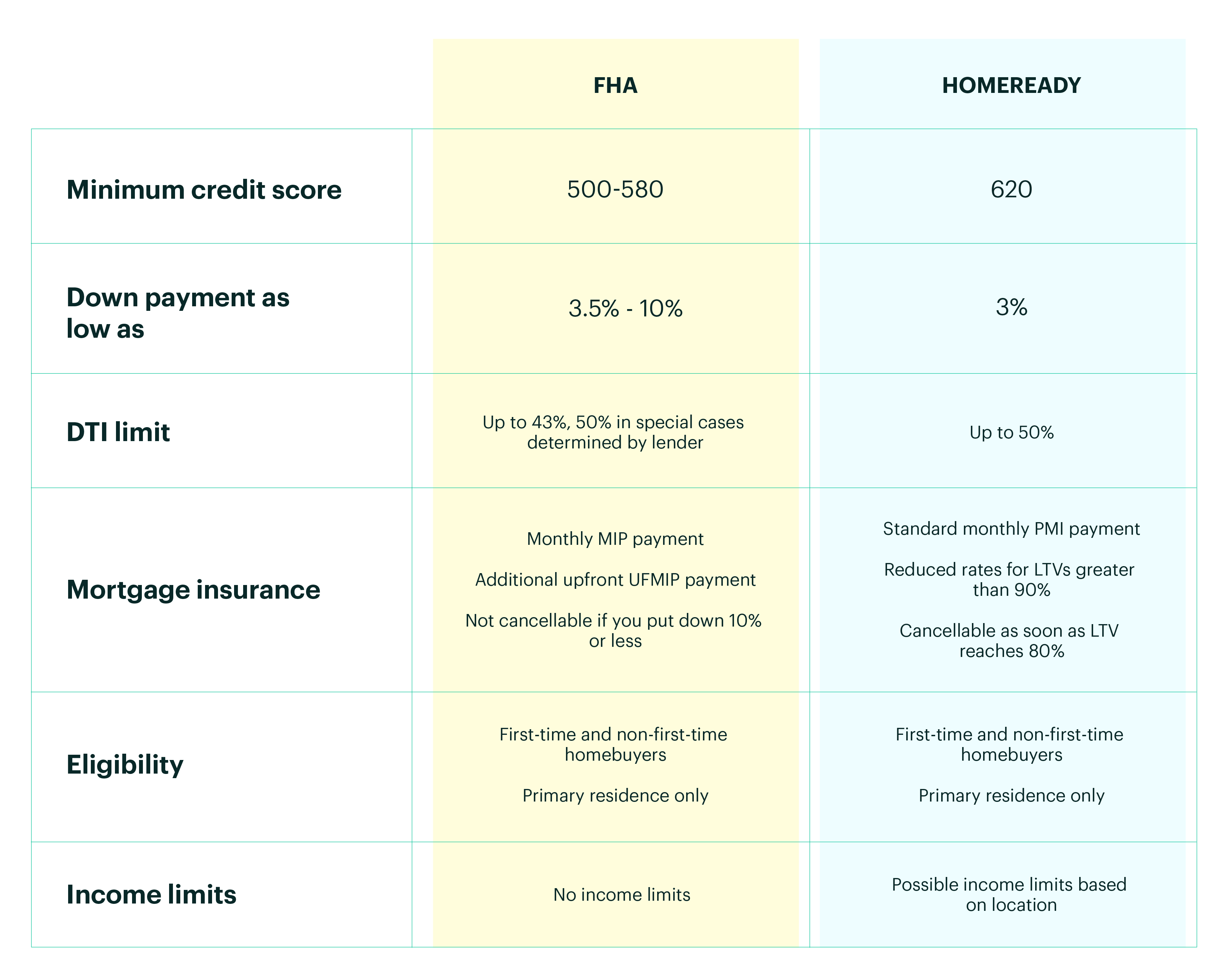
The Kentucky FHA home loan program may accept credit scores as low as 580 and require at least a 3.5 percent down payment of the sales price on a purchase. If you have a credit score below 580, then a 10 percent down payment or more may be acceptable some FHA lenders in Kentucky , providing you meet all program guidelines in regards to debt to income ratios, assets, and income requirements . The loan cannot be used for rental properties and does allow for co-signers if they are related.
Remember, these guidelines are set forth by FHA and all lenders do not have to offer these guidelines, to whereas they may a higher credit score or more money down or income restrictions on how much you can qualify for.
Kentucky FHA Mortgage Loans and Bankruptcy or Foreclosure
In case you had a blemish on your credit report with a bankruptcy, short sale or foreclosure, follow these guidelines.
Kentucky FHA loans requires a passage of two years since the discharge date of a chapter 7 bankruptcy. A chapter 13 bankruptcy may be acceptable after at least 12 months of an on time pay-back period and the borrower has received permission from bankruptcy court to enter the mortgage transaction, and you qualify with the new house payment along with other debts on the credit report.
Three years must pass if you went through a short sale or foreclosure. The date starts when the home was sold, not when you entered the transaction toward foreclosure or short sale period. Sometimes the house will not sell to 1-2 years later after the foreclosure and this is when the passage date starts. Keep this in mind on your next FHA loan pre-approval if you have had a bankruptcy or foreclosure in the past.
Kentucky FHA Loans and Mortgage Insurance
FHA loans have two forms of mortgage insurance which protects the lender for any losses suffered if the borrower defaults on the payment. ne is called upfront mortgage insurance premium (UFMIP) which has a rate of 1.75% of the loan amount. The fee can be added to the loan amount or paid in full as part of your closing costs. In addition, FHA loans also have a 0.8-0.85% (of the loan amount) monthly mortgage insurance. In most cases, this mortgage insurance remains for the life of the loan. To eliminate the mortgage insurance, the borrower must refinance the loan into a non-FHA loan program and have 20% equity in the property.
In addition to the down payment requirements on a FHA loan, they’re closing costs and prepaids to pay at closing. The seller can contribute up to 6% of the sales price to help the buyer with closing costs and prepaid expenses. Closing costs vary from lender to lender and your prepaids would be the same no matter which lender you choose because this is a function of the property ‘s home insurance premium quote you obtain and the property tax bill on the home set by PVA.
Sometimes the lender can pay a credit toward these expenses at closing with a lender credit which lets the lender credit back to you with a higher rate to reduce the costs of the loan’s costs at closing for out of pocket expenses.
All Kentucky FHA loans are assumable, which means that when the homeowner sells a home, the buyer may be able to take on the existing loan and terms (e.g.: balance, rate and remaining loan amount). Of course, anyone interested in the assumable loan feature must go through the approval process (credit check, income verification) with the current lender on the property. This is a very rare occurrence because most sellers are going to sell the home for more than they owe on it.

The view and opinions stated on this website belong solely to the authors, and are intended for informational purposes only. The posted information does not guarantee approval, nor does it comprise full underwriting guidelines. This does not represent being part of a government agency. The views expressed on this post are mine and do not necessarily reflect the view of my employer. Not all products or services mentioned on this site may fit all people. NMLS ID# 57916, (www.nmlsconsumeraccess.org). USDA Mortgage loans only offered in Kentucky.
All loans and lines are subject to credit approval, verification, and collateral evaluation
How to qualify for a Kentucky FHA Home Loan ?
It’s important to understand the different types of loan programs available to you and what benefits and drawbacks there are to each type.
For example, if you’re looking to find a fixer upper this may not be the right loan program for you. But an FHA loan may be a better fit for you if you have little cash saved up for a down payment or if you don’t have a high credit score.
Kentucky FHA loan requirements:
- At least 18 years old to apply
- No age limit. just must be 18 years of age to apply.
- Must occupy the home as a primary residence, no rental homes or investment property
- An appraisal must be done by an FHA-approved appraiser.Typically FHA appraisal in Kentucky costs anywhere from low-end $325 to $525 with most FHA lenders in KY.
- Home inspection is not required
- Termite inspection not required
- 2 years removed from Chapter 7 bankruptcy, and 1 year in Chapter 13 bankruptcy is possible to get a loan while in bankruptcy
- Foreclosure or short sale on previous home mortgage requires 3 years removal from those dates.
- Mortgage insurance (MIP) is required
- Upfront Mortgage Insurance Premium is 1.75% and monthly mortgage insurance is .85% or .80% depending on loan term and loan to value.
- Mortgage insurance is for life of loan.
- No matter your credit scores, everyone pays the same mortgage insurance premiums.
- Must have 2 years of employment history proving a reliable source of income
- 500 FICO score requirement with at least 10% down payment
- 580 FICO score requirement with at least 3.5% down payment
- Gifts and down payment assistance programs are allowed to meet your down payment requirements. Cannot come from seller, but seller can contribute up to 6% of the sales price toward buyer’s closing costs and prepaids.
- Student loan payments are factored into the debt-to-income ratio when applying. Typically if loans are deferred, or in an income=based repayment plan, the FHA underwriters will use 1% of the outstanding balance, which sometimes can make it difficult to qualify.
- Your debt-to-income ratio must not be higher than 31% or total debt obligation cannot be higher than 43% of your current income. This is for a manual underwriter, meaning that if the AUS underwriting system by mortgage lenders will approve you for a higher debt to income ratio, that is fine.
Senior Loan Officer
If you are an individual with disabilities who needs accommodation, or you are having difficulty using our website to apply for a loan, please contact us at 502-905-3708.
Disclaimer: No statement on this site is a commitment to make a loan. Loans are subject to borrower qualifications, including income, property evaluation, sufficient equity in the home to meet Loan-to-Value requirements, and final credit approval. Approvals are subject to underwriting guidelines, interest rates, and program guidelines and are subject to change without notice based on applicant’s eligibility and market conditions. Refinancing an existing loan may result in total finance charges being higher over the life of a loan. Reduction in payments may reflect a longer loan term. Terms of any loan may be subject to payment of points and fees by the applicant Equal Opportunity Lender. NMLS#57916http://www.nmlsconsumeraccess.org/
— Some products and services may not be available in all states. Credit and collateral are subject to approval. Terms and conditions apply. This is not a commitment to lend. Programs, rates, terms and conditions are subject to change without notice. The content in this marketing advertisement has not been approved, reviewed, sponsored or endorsed by any department or government agency. Rates are subject to change and are subject to borrower(s) qualification.
![]() |
Student Loans In Collections, What Can I Do to get Approved For A Kentucky Mortgage ?
|
|
FHA eliminates two unnecessary and outdated lending roadblocks
The Federal Housing Administration has taken steps to reduce some of the regulatory burdens that belabor the lending process, releasing two mortgagee letters Tuesday with updated guidelines on home warranty and inspection requirements for single-family FHA loans. FHA Commissioner Brian Montgomery said the moves align with the administration’s goal streamline and update guidelines in an effort to reduce regulatory barriers.
Source: FHA eliminates two unnecessary and outdated lending roadblocks
KENTUCKY HUD HOMES FOR SALE

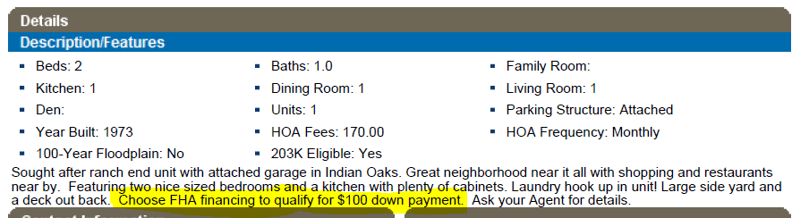
FHA’s $100 Down Program is allowed for Kentucky Home Buyers buying a home that is owned by HUD or FHA. The $100 Down sales incentive permits a Borrower to purchase a HUD REO Property with FHA-insured financing with a minimum downpayment of $100.
This program can ONLY be used to purchase homes owned by HUD OR FHA.
Check the link below to see if any properties are offered in your area. If a property is eligible, the listing on the website will specify $100 Down Financing Incentivize.
You can find all current listings for sale by HUD here.

The main factors in qualifying for this Kentucky FHA program are that the property must be a HUD REO property and purchased using FHA Financing, aside from these, the requirements include:
- Occupancy: The property must be purchased for use as your Primary Residence.
- Property Type: Eligible properties include 1 or 2 unit homes, manufactured homes, condos, and PUDs.
- Full Price Offer: You must submit an offer for the full listing price. Typically, when you purchase a home, you make an offer to the seller…. we all want to get the best deal so you may offer less than the asking price… or you may offer more if the home you want is being bid on by many buyers…. With HUD REO properties this is not allowed. The sales price HUD has on the listing is what you must offer.
- Sales Contract: The $100 down payment incentive must be included on the executed sales contract.
- Cannot have purchased a HUD home within the preceding 24 months
- Credit Score: 580 is the minimum FICO score you must have to qualify for a FHA Kentucky Home Buyer using the HUD $100 Down loan program.
- Usually takes about 30-45 days to close
- Earnest Money Deposit usually needs to be at least $500 to $1000
- This is a manual underwriter meaning that your debt to income ratio has to be 31 and 43% respectively
- No Chapter 7 Bankruptcies in last two years
- No Foreclosures in last 3 years
- Clear Cavirs on borrowers.
|
||||||||||||||||||||||||||||||||||||||||||||||||||||||||||||||||||||||||||||||||||||||||||||||||||||||||||||||||||||||||||||||||||||||||||||||||||||||||||||||||||||||||||||||||||||||||||||||||||||||||||||||||||||||||||||||||||||||||||||||||||||||||||||||
|
||||||||||||||||||||||||||||||||||||||||||||||||||||||||||||||||||||||||||||||||||||||||||||||||||||||||||||||||||||||||||||||||||||||||||||||||||||||||||||||||||||||||||||||||||||||||||||||||||||||||||||||||||||||||||||||||||||||||||||||||||||||||||||||
|
||||||||||||||||||||||||||||||||||||||||||||||||||||||||||||||||||||||||||||||||||||||||||||||||||||||||||||||||||||||||||||||||||||||||||||||||||||||||||||||||||||||||||||||||||||||||||||||||||||||||||||||||||||||||||||||||||||||||||||||||||||||||||||||
|
|
|
|
Kentucky FHA loans after a bankruptcies, foreclosures, deeds-in-lieu of foreclosure, pre-foreclosures, short sales, and mortgage charge-offs.
Kentucky FHA loans after a significant derogatory credit events which include bankruptcies, foreclosures, deeds-in-lieu of foreclosure, pre-foreclosures, short sales, and mortgage charge-offs.
A Chapter 7 bankruptcy – MUST be discharged at least 2 years from Case Number Assignment Date. Requirements
include:
1. Complete Copy of Bankruptcy paperwork MUST be provided
2. Borrower must write a detailed explanation explaining the reason for the Bankruptcy
3. The Borrower must have re-established good credit; or chosen not to incur new credit obligations.
4. An elapsed period of less than two years, but not less than 12 months, may be acceptable, if the Borrower:
– Can show that the bankruptcy was caused by extenuating circumstances beyond the Borrower’s control; and
– Has since exhibited a documented ability to manage their financial affairs in a responsible manner.
– If a Chapter 7 is discharged less than 2 years from the date of Case Number Assignment Date the loan must be downgraded to Manual Underwriting and meet all requirements listed in HUD 4000.1 Handbook
Chapter 13 must be discharged ** Requirements include:
1. Complete Copy of Bankruptcy paperwork MUST be provided
2. Borrower must write a detailed explanation explaining the reason for the Bankruptcy
3. The Borrower must have re-established good credit; or chosen not to incur new credit obligations.
4. An elapsed period of less than two years, but not less than 12 months, may be acceptable, if the Borrower:
‐ Can show that the bankruptcy was caused by extenuating circumstances beyond the Borrower’scontrol; and
‐ Has since exhibited a documented ability to manage their financial affairs in a responsible manner.
5. If a Chapter 13 is discharged less than 2 years from the date of Case Number Assignment Date the loan must be downgraded to Manual Underwriting and meet all requirements listed in HUD 4000.1 Handbook
Foreclosure/Deed-in-Lieu
1. A Borrower is generally not eligible for a new FHA-insured Mortgage if the Borrower had a foreclosure or a DIL of foreclosure in the three-year period prior to the date of Case Number Assignment.
2. This three-year period begins on the date of the DIL or the date that the Borrower transferred ownership of the Property to the foreclosing Entity/designee.
Short Sale
1. A Borrower is generally not eligible for a new FHA-insured Mortgage if they relinquished a Property through a Short Sale within three years from the date of Case Number Assignment.
2. The three-year period begins on the date of transfer of title by Short Sale.
FHA loans are good for home buyers with lower credit scores and no much down, or with down payment assistance grants. FHA will allow for grants, gifts, for their 3.5% minimum investment and will go down to a 580 credit score.
The current mortgage insurance requirements are kinda steep when compared to USDA, VA , but the rates are usually good so it can counteract the high mi premiums. As I tell borrowers, you will not have the loan for 30 years, so don’t worry too much about the mi premiums.
The mi premiums are for life of loan like USDA.
FHA requires 2 years removed from bankruptcy and 3 years removed from foreclosure.
Maximum FHA loan limits in Kentucky are set around $285,000 -$299,000 depending on the county in Kentucky
Joel Lobb
Senior Loan Officer
(NMLS#57916)
American Mortgage Solutions, Inc.
10602 Timberwood Circle, Suite 3
Louisville, KY 40223
text or call my phone: (502) 905-3708
email me at kentuckyloan@gmail.com
The view and opinions stated on this website belong solely to the authors, and are intended for informational purposes only. The posted information does not guarantee approval, nor does it comprise full underwriting guidelines. This does not represent being part of a government agency. The views expressed on this post are mine and do not necessarily reflect the view of my employer. Not all products or services mentioned on this site may fit all people. NMLS ID# 57916, (www.nmlsconsumeraccess.org). Mortgage loans only offered in Kentucky.
All loans and lines are subject to credit approval, verification, and collateral evaluation and are originated by lender. Products and interest rates are subject to change without notice.
Joel E Lobb
American Mortgage
5029053708
email us here
Kentucky FHA, VA, USDA & Rural Housing, KHC and Fannie Mae mortgage loans.
Getting a FHA Loan Approved with the new Guidelines for Student Loans in Kentucky for 2018
2018 KENTUCKY FHA MORTGAGE GUIDELINES FOR APPROVAL WITH STUDENT LOANS

Student Loan Payment Calculation
Must include all student loans in the borrower’s liabilities, regardless of the payment type or status of payments.
Calculation of monthly obligation, regardless of the payment status, must use either:
the greater of:
• 1 percent of the outstanding balance on the loan; or
• the monthly payment reported on the borrower’s credit report; or
the actual documented payment, provided the payment will fully amortize the loan over its term.
Additional documentation required if the payment used for the monthly obligation is:
• less than 1 percent of the outstanding balance reported on the borrower’s credit report;and
• less than the monthly payment reported on the borrower’s credit report.
Provide written documentation of the actual monthly payment, the payment status, and evidence of the outstanding balance and terms from the creditor.
Guide Reference – 4000.1 II.A.4.b.iv(H) (TOTAL) and II.A.5.a.iv.(G) (Manual)
I can answer your questions and usually get you pre-approved the same day.
Call or Text me at 502-905-3708 with your mortgage questions.
Email Kentuckyloan@gmail.com
Joel Lobb (NMLS#57916)
Senior Loan Officer
Text/call 502-905-3708
kentuckyloan@gmail.com
, NMLS ID# 57916, (www.nmlsconsumeraccess.org). I lend in the following states: Kentucky
Five strategies for first time home buyers Kentucky 2018
What You Need To Know About A Mortgage… BEFORE You Get One!!!
Qualifying for a Mortgage
Mortgage companies are in business to make money by lending money that is secured by an asset large enough to sell and recover their capital if the borrower is no longer able or willing to pay the payments. They are not in the business of owning property and would rather not have to foreclose on a loan, repossess the property and sell it to recapture their capital. This does happen but it is not their primary business. They would rather have their borrowers make their payments so that they could collect the interest and move on down the road. To increase their odds of that happening, mortgage companies look at several areas of your financial history to determine if you will meet their standards. This is called Qualifying for a Mortgage.
What the mortgage company finds when they look at these areas will help determine the type of mortgage that is available to you and the interest rate you will pay on the money that you borrow.
The areas that they are interested in looking at are:
Job History
Lenders want to know if you have been in your current job and/or profession for at least two years. They also want to know if you are retired or self-employed.
Income

Mortgage lenders want to know how much your monthly income is before taxes are taken out (Gross Monthly Income). Typically you will be asked to provide check stubs for the last 30 days and Federal Tax Returns or W-2’s for the last two years to prove your income.
If you are self-employed and it is difficult for you to prove your gross income to the lender you may be able to get a “stated income” loan. If that is the route that you take, your income must be “reasonable” for your profession. Since stated income loans are riskier for the lender you will generally have a higher interest rate.
Credit History
Mortgage lenders really like it if you have a history of paying your bills on time. This is reflected in your credit report and FICO score. If you have “bad credit”, you are NOT automatically disqualified from getting a mortgage. Lower credit scores will increase the interest rate that you will be required to pay and sometimes that increase will be quite significant.
Debt Load
You can have an awesome job with an income to make Bill Gates jealous and a great credit score but if you have already acquired too much long term debt you may not qualify for the loan you want.
Assets
Mortgage lenders will want to check your bank accounts to make sure that you have the cash necessary to pay the down payment and closing costs and that you have “reserves” available to make the loan payment. Often, the lender will require 3-6 months reserves. (Reserves can be in a 401K or other retirement account that you can pull the money out of)
Requested Loan Amount
The loan you are requesting will need to be proportional to your ability to make the payments. Be reasonable with your house buying expectations – don’t expect to buy a lot more house than you can afford. The recent housing bust defined the term “house poor” and got a lot of people into financial trouble. Again, mortgage lenders would much rather you make your monthly house payments because everyone loses if they have to foreclose.
Determining YOUR Mortgage Interest Rate
The market place determines the range of interest rates available for any mortgage and the lending rates change daily. The specific interest rate you will pay is based on how well qualified you are and the type of loan you want.
Interest rates are typically based on the answers to these questions:
How Good Is Your Credit Score?
The most widely used score is the FICO score, the credit score created by Fair Isaac Corporation. Lenders use the FICO Score to help them make billions of credit decisions every day. Fair Isaac calculates the FICO Score based solely on information in consumer credit reports maintained by the credit reporting agencies.
FICO credit scores range from 300 to 850. That FICO Score is calculated by a mathematical equation that evaluates many types of information from your credit report, at that agency. By comparing this information to the patterns in hundreds of thousands of past credit reports, the FICO Score estimates your level of future credit risk.
With the top end of the credit score being 850, anything above about 720 is considered excellent. Some local lenders set 740 as the benchmark for their preferred interest rates. Having a lower credit score DOES NOT mean you will not get a loan. You may qualify BUT your interest rate will be higher than someone with better credit.
How Big Is Your Down-Payment?
The Down-Payment is the amount of your own money you are going to put into buying the property. The more money you put into the property on the front end, the lower the risk of you not paying the payments. The amount of your down payment also directly affects the amount of your loan (purchase price – down payment = loan amount). This is called the Loan to Value Ratio (LTV).
The LTV is the percentage of the value of the house that the mortgage will cover (loan amount / purchase price x 100). For example, the property you are interested in buying is selling for $100,000. You have $20,000 for the down-payment and want a mortgage for the other $80,000. The LTV for this mortgage is 80%.
Similar to the LTV is the Combined Loan to Value Ratio (CLTV). The CLTV is used when 2 loans are used to finance the home purchase. You may see or hear terms like “80-20” or “80-15-5”. This refers to the 1st lien percentage (80), the 2nd lien percentage (20 or 15) and the down payment percentage (5).
How Much Debt Do You Currently Have?
It only makes sense that the more debt you have the riskier the loan is for the lender. There is a finite amount of income in all of our households and it all gets allocated every month. Lenders use a “debt-to-income” ratio to determine how qualified you are for the loan based on how much debt you already have.
Your Debt to Income Ratio (DTI) is the percentage of your income that you owe in debt on a monthly basis. For example, if you make $5,000 per month, and have debt payments (car loans, credit cards, student loans, etc.) of $2,000, your DTI ratio is 40%. The higher this ratio is, the less likely you will be to qualify for a low interest rate.
Conventional loans typically have a qualifying ratio of 28/36. FHA loans will sometimes allow for a higher debt load of 29/41 qualifying ratio.
The first number in a qualifying ratio is the maximum percentage of your gross monthly income that can be applied to your mortgage. That includes the loan principal and interest, private mortgage insurance, property taxes, homeowners insurance, and homeowner’s association dues.
The second number is the maximum percentage of your gross monthly income that can be applied to housing expenses and recurring debt. Recurring debt includes monthly payments for cars, boats, motorcycles, child support payments and monthly credit card payments.
Example: of a 28/36 qualifying ratio:
Gross monthly income of $5,000 x .28 = $1400 can be applied to housing.
Gross monthly income of $5,000 x .36 = $1,800 can be applied to recurring debt plus housing expenses
Example: of a 29/41 qualifying ratio:
Gross monthly income of $5,000 x .29 = $1,450 can be applied to housing.
Gross monthly income of $5,000 x .41 = $2,050 can be applied to recurring debt plus housing expenses
These are just general guidelines and everyone’s personal finances are unique.

Here is a KEY point to remember…
Your credit score is one of the most vital piece of information when qualifying for a loan and you can greatly affect it too.
Below are the important items I will discuss:
- What is a credit report?
- What do mortgage lenders use to determine my credit score?
- What does FICO stand for?
- What determines my FICO score?
- What’s a good FICO score?
- What if my FICO score is below 620?
- Can I get a copy of my credit report?
- Ah Ha! Now I understand all things credit and I’m this much closer to owning my home!
What is a credit report?
A credit report record’s your credit history including information about:
- Your identity: name, social security number, date of birth and possibly employment information.
- Your existing credit: credit card accounts, mortgages, car loans, students loans etc.including credit terms, how much you owe, and your payment history.
- Your public record: Judgments against you, tax liens or bankruptcies.
- Recent Credit Inquiries: Requests for your information from companies extending credit such as credit card companies, auto loans, etc.
Be aware, credit card companies, car companies and mortgage lenders use slightly different models to determine credit risk. Today we are focusing on Mortgage related credit.
How do lenders calculate my credit score?
Your credit score is the key to your castle. Your home is most likely the most expensive purchase you will ever make. Therefore, when buying a home, lenders use a different system for assessing risk than credit card companies or even auto loan companies use.
Mortgage lenders use a comprehensive system of checking credit called a Residential Mortgage Credit Report (RMCR), commonly called a “Tri-Merge” report. The RMCR report combines your three credit reports from the three national credit bureaus, Equifax, Experian, and TransUnion. Each credit reporting agency calculates your credit score or FICO Score differently. Therefore, pulling from all three bureaus gives lenders a more complete picture of your credit behavior.
Once pulled, lenders use the average of these three scores, usually the middle score, to determine loan qualification and interest rate. For example, if Equifax gives you a 720, Experian a 730 and TransUnion a 740, the lender will use the 730 FICO Score to help determine the terms of your mortgage. If you are applying for a loan jointly, your partner’s three reports will also be pulled.
What does FICO stand for?
FICO stands Fair, Isaac and Company. Over 25 years ago, lenders began using FICO’s scoring model, or algorithm, to fairly and more accurately determine a person’s credit risk. Since it’s inception, FICO’s continually updates its’ algorithms to reflect more current lending trends and consumer behaviors. Today, FICO Scores are used by over 90% of enders. Importantly, your FICO score can impact your loan interest rates, terms, approvals and more.
What determines my FICO score?
A Mortgage FICO score is determined by an algorithm that generally looks at five credit factors including payment history, current level of indebtedness, types of credit used, length of credit history and new credit accounts.
What’s a good FICO score?
To qualify for a conventional loan, most Mortgage lenders require a FICO score of 620+. The best interest rates go to borrowers with a 740+ FICO score. For each 40 point drop, borrowers can expect to see a slightly higher interest rates by about 0.2 percentage points. If a borrower drops below 660, the increase is likely to be twice as big, a 0.43 percentage point increase. If your credit score is below 620, it is very difficult to get a conventional loan in today’s marketplace. However, don’t be discouraged. You may still be able to buy a home.
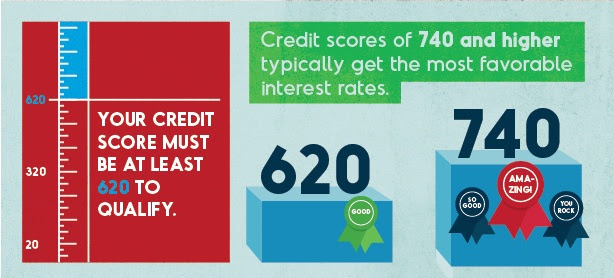
What if my FICO or credit score is below 620?
If your score is below 620, you may still be able to buy a home. There are several options:
- Put more money down. Some lenders offset a weak credit score with a higher down payment. A higher down payment gives you more equity in your home, lowering the lender’s risk.
- You may qualify for a non conventional government issued loan such as an FHA, Veterans Affairs and/or U.S. Department of Agriculture loan which have less stringent lending requirements.
-
You may work to get that credit score up!
-
Correct any errors on your report. Analyze your credit items line by line. If you notice a mistake, dispute it right away with either the credit bureau providing the report or the company that providing the incorrect information to the credit bureau.
-
Make all your payments on time. Late payments are the No. 1 way to lower your credit score.
-
Pay down revolving debt. Keeping your credit balances low helps to raise your score.
-
Sit back and relax. As long as you’re paying down debt and making payments on time, your credit score will eventually rise on its own.
-
Can I get a copy of my credit report after a lender has pulled it?
Yes! In fact, you can get one free credit report every twelve months from each of the nationwide credit bureaus—Equifax, Experian, and TransUnion. You may also purchase your credit score at any time from any of the credit bureaus. Some Mortgage lenders will tell you your score when you apply for a loan or even give you a copy of your report but they are not required to do so. However, if a lender denies you credit, under the Fair Credit Reporting Act (FCRA) you are entitled to a free copy of your personal credit report if you have received notice that in the past 60 days you have been declined credit.
You ALWAYS get a free copy of your credit report from me.
If you’re ready to buy a new home and want to shop around for the best deal on a mortgage…
Looking for a mortgage, auto or student loan may cause multiple lenders to request your credit report, even though you are only looking for one loan. To compensate for this, the score ignores mortgage, auto, and student loan inquiries made in the 30 days prior to scoring. So, if you find a loan within 30 days, the inquiries won’t affect your score while you’re rate shopping. In addition, the score looks on your credit report for mortgage, auto, and student loan inquiries older than 30 days. If it finds some, it counts those inquiries that fall in a typical shopping period as just one inquiry when determining your score. For FICO scores calculated from older versions of the scoring formula, this shopping period is any 14 day span. For FICO scores calculated from the newest versions of the scoring formula, this shopping period is any 45 day span. Each lender chooses which version of the FICO scoring formula it wants the credit reporting agency to use to calculate your FICO score.
What Type of Loan Are You Looking For?
40 year fixed, 30 year fixed, 20 year fixed, 15 year fixed, 10 Year Fixed, Adjustable Rate, etc. All of these loan types have different interest rate ranges.
Locking Your Interest Rate
Once you have completed a loan application, determined what type of loan you want and qualified for that loan you can “lock” the interest rate for that loan. Locking the Interest Rate means, for the period of the “lock” you are guaranteed that interest rate. Lock periods are typically 15, 30 or 60 days, although you may be able to get an extended lock period.
Once you lock your interest rate:
If you do not close on the loan before the lock period expires, you will NOT have a guaranteed interest rate anymore. And, the longer the lock period, the higher the rate will be. For example, a 15 day lock may be at 5.125%, a 30 day lock at 5.25%, and a 60 day lock at 5.375%. So, before locking your loan, be sure you are not locking for too long a time or for too short a time.
Interest rates fluctuate daily and may go up or down. By locking your rate, you are betting that rates will go up in the future.
What does “Buying Down” the Interest Rate Mean?
You can reduce the interest rate on your mortgage by paying “points” at closing. A point is 1% of the value of the loan, so a point on a $200,000 loan is $2,000. If you “buy down” you loan to a lower interest rate you will have lower monthly payments and pay less interest over the life of the loan. However, “buying down” you loan to a lower interest rate means more money out of your pocket on the front end when you close the loan. You should do the math and weigh each side of the equation before making a decision about buying down the interest rate or not.

What Are The Closing Costs and Fees?
There are four types of closing costs and fees…
Those charged by the mortgage company and/or mortgage broker, those charged by 3rd party vendors, those charged by the Title Company, Escrow Company or Escrow Attorney and Pre-Paid Charges.
Lender Fees
These can include loan origination fees and Broker fees which are usually a percentage of the loan amount; administrative fees and application fees, processing fees and underwriting fees. These last fees usually run from $100 to $500, and ALL of them are negotiable.
3rd Party Vendor charges
These are charges collected by the lender and paid to outside companies that provide a service. These are not usually negotiable and can include appraisal charges, flood certification fees, courier charges, document prep fees, mortgage lender attorney fees, etc.
Title Company charges
These are the fees charged by the Title Company, Escrow Company or Escrow Attorney. They are usually set by the state and are not negotiable. These charges include title insurance, attorney fees, state/county/city registration fees, etc.
Pre-Paid Charges
If the lender will be establishing an escrow account to pay taxes and insurance, the buyer will pre-pay taxes and insurance to establish an escrow account and will pre-pay the interest on the loan until the end of the month in which the loan closes.
Does The Closing Date Really Matter?
The day you choose to close determines the amount of pre-paid interest you will have to pay. Closing at the end of the month means that you will pay less pre-paid interest. For example, if you close on October 1st you will pay 31 days of pre-paid interest. If you close on October 31st you will pay 1 day of pre-paid interest.
When Is My First Payment Due?
It doesn’t matter what day of the month you close on, you will not have your first loan payment due until a month has passed. So, if you close in October, your first payment is due in December – you get November for free!
What Is PMI?
Private Mortgage Insurance (PMI) is required on all loans that have a LTV greater than 80%. PMI is an insurance premium that you pay every month as part of your monthly payment. However, PMI is not intended to protect you. PMI is insurance coverage that protects the mortgage lender against default on the loan. If you stop making your payments, the mortgage lender is paid a percentage of the loan amount (usually 25% to 35%) by the insurance company.
We suggest that our clients use a local mortgage lender and avoid the big banks. Local lenders provide excellent service, you talk to the same person throughout the loan process, if something is (or isn’t) happening with the loan they can easily check on it with someone right there in their office.
What Other Questions Do You Have?
If you have mortgage questions, ask them in the comments section so others will get the answer too.
If you want a personalized answer for your unique situation call, text, or email me.
The view and opinions stated on this website belong solely to the authors, and are intended for informational purposes only. The posted information does not guarantee approval, nor does it comprise full underwriting guidelines. This does not represent being part of a government agency. The views expressed on this post are mine and do not necessarily reflect the view of my employer. Not all products or services mentioned on this site may fit all people. NMLS ID# 57916, (www.nmlsconsumeraccess.org). Mortgage loans only offered in Kentucky.
Labels: 100% Financing, 2017 KY First Time Buyer Programs, conventional loans, down payment assistance, fha, First Time Home Buyers, grants first time home buyer kentucky, kentucky va mortgage, khc, rhs, usda
Fill out my form!
—
Posted By Blogger to Kentucky First Time Home Buyer Mortgage Loans
Kentucky FHA Loans Beginning January 27, 2017 will have lower mortgage insurance fees

For the first time in two years, the Federal Housing Administration (FHA) has announced that it will be lowering its annual mortgage insurance premiums for Kentucky FHA Homebuyers and homeowners looking to refinance a FHA mortgage loan
Kentucky Homeowners with an existing FHA loan that haven’t refinanced in the past two years may be able to reduce their payment and get a lower monthly payment.
U.S. Housing and Urban Development Secretary Julián Castro said on Monday the FHA will reduce the annual premiums most borrowers will pay by a quarter of a percent, or 25 basis points, for most new mortgages with a closing or disbursement date on or after January 27th of 2017. The new rates are projected to save new FHA-insured homeowners an average of $500 this year, Castro said.
When the FHA announced late last year that its flagship fund, the Mutual Mortgage Insurance Fund, grew for the fourth straight year, it led to many question whether we would see a cut to its mortgage insurance premiums again. Now we have an answer. Click the headline for the full details on the FHA reducing mortgage insurance premiums.
Source: FHA cuts mortgage insurance premiums again
2017 Kentucky FHA Annual Mortgage Insurance Premiums


According to the FHA, it will cut the annual mortgage insurance premiums most borrowers will pay by one-quarter of a percentage point, or 25 basis points
Senior Loan Officer
Kentucky FHA loan mortgage insurance changes for 2017. Lower mortgage monthly insurance premium-savings of 25% for Louisville, Kentucky FHA homebuyers and homeowners
fha reduced mip program