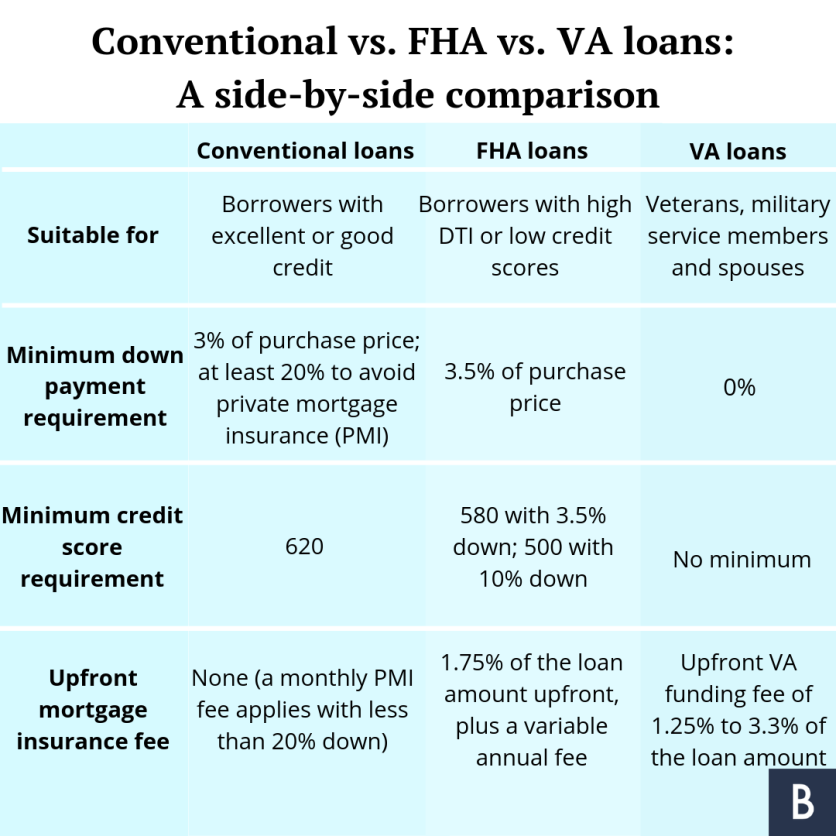
The type of mortgage you’re applying for determines the minimum requirements you’ll have to meet for your down payment, credit score, and debt-to-income ratio.
Find out what type of loan you might qualify for or what aspects of your finances you’ll need to improve to get a better shot at qualifying for a mortgage.
Loan Type
Min. Down Payment
Min. Credit Score
Max DTI
Property Type
Conventional
3%
620
45%
Primary, secondary, investment
VA
0%
none
none
Primary
FHA
3.5%
500
50%
Primary
USDA
0%
none
41%
Primary
Keep in mind: The minimum down payment, minimum credit score, and maximum DTI shown in the table apply to mortgages used to purchase a primary residence. While you can use a conventional loan or a jumbo loan to purchase a home for another purpose, you might need a larger down payment, a higher credit score, more cash reserves, or all three.
Credit score needed to buy a house
Mortgage lending is risky, and lenders want a way to quantify that risk. They use your three-digit credit score to gauge the risk of loaning you money since your credit score helps predict your likelihood of paying back a loan on time. Lenders also consider other data, such as your income, employment, debts and assets to decide whether to offer you a loan.
Different lenders and loan types have different borrower requirements, loan terms and minimum credit scores. Here are the requirements for some of the most common types of mortgages.
Conventional loan
Minimum credit score: 620
A conventional loan is a mortgage that isn’t backed by a federal agency. Most mortgage lenders offer conventional loans, and many lenders sell these loans to Fannie Mae or Freddie Mac — two government-sponsored enterprises. Conventional loans can have either fixed or adjustable rates, and terms ranging from 10 to 30 years.
You can get a conventional loan with a down payment as low as 3% of the home’s purchase price, so this type of loan makes sense if you don’t have enough for a traditional down payment. However, if your down payment is less than 20%, you’re required to pay for private mortgage insurance (PMI), which is an insurance policy designed to protect the lender if you stop making payments. You can ask your servicer to cancel PMI once the principal balance of your mortgage falls below 80% of the original value of your home.
FHA loan
Minimum credit score (10% down): 500
Minimum credit score (3.5% down): 580
FHA loans are backed by the Federal Housing Administration (FHA), a part of the U.S. Department of Housing and Urban Development (HUD). The FHA incentivizes lenders to make mortgage loans available to borrowers who might not otherwise qualify by guaranteeing the federal government will repay the mortgage if the borrower stops making payments. This makes an FHA loan a good option if you have a lower credit score.
FHA loans come in 15- or 30-year terms with fixed interest rates. Unlike conventional mortgages, which only require PMI for borrowers with less than 20% down, all FHA borrowers must pay an up-front mortgage insurance premium (MIP) and an annual MIP, as long as the loan is outstanding.
VA loan
Minimum credit score: N/A
VA loans are mortgages backed by the U.S. Department of Veterans Affairs (VA). The VA guarantees loans made by VA-approved lenders to qualifying veterans or service members of the U.S. armed forces, or their spouses. This type of loan is a great option for veterans and their spouses, especially if they don’t have the best credit and don’t have enough for a down payment.
VA loans are fixed-rate mortgages with 10-, 15-, 20- or 30-year terms.
Most VA loans don’t require a down payment or monthly mortgage insurance premiums. However, they do require a one-time VA funding fee, that ranges from 1.4% to 3.6% of the loan amount.
USDA loan
Minimum credit score: N/A
The U.S. Department of Agriculture guarantees loans for borrowers interested in buying homes in certain rural areas. USDA loans don’t require a minimum down payment, but you have to meet the USDA’s income eligibility limits, which vary by location.
All USDA mortgages have fixed interest rates and 30-year repayment terms.
USDA-approved lenders must pay an up-front guarantee fee of up to 3.5% of the purchase price to the USDA. That fee can be passed on to borrowers and financed into the home loan. If the home you want to buy is within an eligible rural area (defined by the USDA) and you meet the other requirements, this could be a great loan option for you.
What else do mortgage lenders consider?
Your credit score isn’t the only factor lenders consider when reviewing your loan application. Here are some of the other factors lenders use when deciding whether to give you a mortgage.
Debt-to-income ratio — Your debt-to-income (DTI) ratio is the amount of debt payments you make each month (including your mortgage payments) relative to your gross monthly income. For example, if your mortgage payments, car loan and credit card payments add up to $1,800 per month and you have a $6,000 monthly income, your debt-to-income ratio would be $1,800/$6,000, or 30%. Most conventional mortgages require a DTI ratio no greater than 36%. However, you may be approved with a DTI up to 45% if you meet other requirements.
Employment history — When you apply for a mortgage, lenders will ask for proof of employment — typically two years’ worth of W-2s and tax returns, as well as your two most recent pay stubs. Lenders prefer to work with people who have stable employment and consistent income.
Down payment — Putting money down to buy a home gives you immediate equity in the home and helps to ensure the lender recoups their loss if you stop making payments and they need to foreclose on the home. Most loans — other than VA and USDA loans — require a down payment of at least 3%, although a higher down payment could help you qualify for a lower interest rate or make up for other less-than-ideal aspects of your mortgage application.
The home’s value and condition — Lenders want to ensure the home collateralizing the loan is in good condition and worth what you’re paying for it. Typically, they’ll require an appraisal to determine the home’s value and may also require a home inspection to ensure there aren’t any unknown issues with the property.
The Federal Housing Administration (FHA) Mortgagee Letter (ML) 22-17 announced that FHA’s Technology Open To Approved Lenders (TOTAL) Mortgage Scorecard will begin scoring a borrower’s positive rental payment history as part of the credit risk analysis when they are applying for FHA-insured financing.
TOTAL will begin scoring on or after October 30, 2022, as well as for case numbers assigned on or after September 20, 2021, allowing lenders to implement the guidance on existing pipeline cases without the need to obtain a new case number.
Here’s what you need to know about Kentucky FHA Loans and the changes that have been made for 2022.
What is a Kentucky FHA loan?
It stands for a Federal Housing Administration loan, meaning it is backed by the U.S. government. It is not made by a government agency. You deal directly with a mortgage lender or broker to get the loan, but the FHA will typically buy the loan from the lender after it is made or guarantee the lender against loss. FHA loans typically require lower down payments and credit scores than most conventional loans, making them a clear favorite among first-time buyers.
What Are the Terms?
These loans can have terms of either 30 years or 15 years. The interest rate is fixed for the entire loan length.
FHA borrowers are required to pay mortgage insurance premiums, but after a borrower’s equity in their home increases they may be able to refinance into a conventional loan and eliminate the monthly mortgage insurance premiums.
What Are the Qualifications?
To qualify for an FHA mortgage, home buyers need a FICO credit score of 580 or higher and a down payment of 3.5% (or a minimum down payment of 10% with a 500 FICO score).
These loans also require a two-year employment and income verification and the property as must be used as a primary residence.
If a borrower has had a bankruptcy, they must wait one to two years depending on if Chapter 13 or Chapter 7 before applying and three years after a foreclosure.
Increased Loan Limits for 2022
In 2022, for most parts of the U.S., Kentucky FHA borrowers can take out a loan for up to $420,680, an increase from 2021’s limit of $356,362.
FHA has published the following guideline updates, which will be effective for all Kentucky FHA loans with case numbers assigned on or after September 9th
Specific verbiage for Well Water Testing has been added indicating that it must be performed by a disinterested party in a method acceptable to the local health authority. The borrower or any other interested party may not have contact with the sample. Additionally, cases mandating a Well Water Test have been added to include (but not limited to) the following
Newly constructed properties and/or wells
Properties with deficiencies in the well or well water as determined by an appraiser
Areas where water has been reported or is otherwise known to be unsafe
Properties located in close proximity to dumps, landfills, industrial sites, farms, or other sites that could contain hazardous waste
Properties where distance between well and septic systems is less than 100 feet
Average Overtime, Bonus, or Tip income earned over the previous 2 years (or if earned less than 2 years, the total length of time it has been received); OR
Average Overtime, Bonus, or Tip income earned over the previous year
All requirements regarding unreimbursed business expenses and Commission Income or Automobile Allowances has been completely removed to align with current IRS tax laws
Rent Below Fair Market has been defined as an inducement to purchase when the borrower is allowed to live in the property rent free or at a rental amount more than 10 percent under the fair market rent as determined by the appraiser.
Clarification has been added that Reduction in Term for Kentucky FHA Mortgage Streamline Refinances refers specifically to the reduction of the remaining amortization period of the existing mortgage.
FHA Guidelines For Bankruptcy, income, down payment, mortgage insurance, credit scores, work history for FHA loan
If you have questions about qualifying as first time home buyer in Kentucky, please call, text, email or fill out free prequalification below for your next mortgage loan pre-approval.
This web site is not the FHA, VA, USDA, HUD or any other government organization responsible for managing, insuring, regulating or issuing residential mortgage loans.
All approvals and rates are not guaranteed, and are only issued based on standard mortgage qualifying guidelines
Remember, we are even available this weekend for pre-qualifications or questions. Call our cell phone or email us. If you miss us, leave a message and we WILL call you back
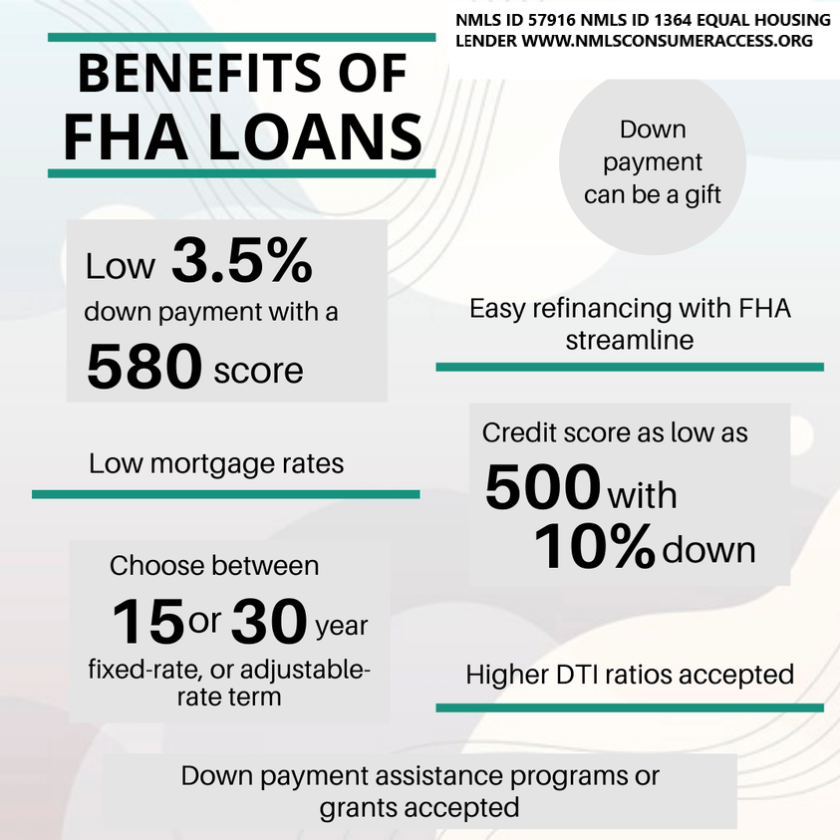
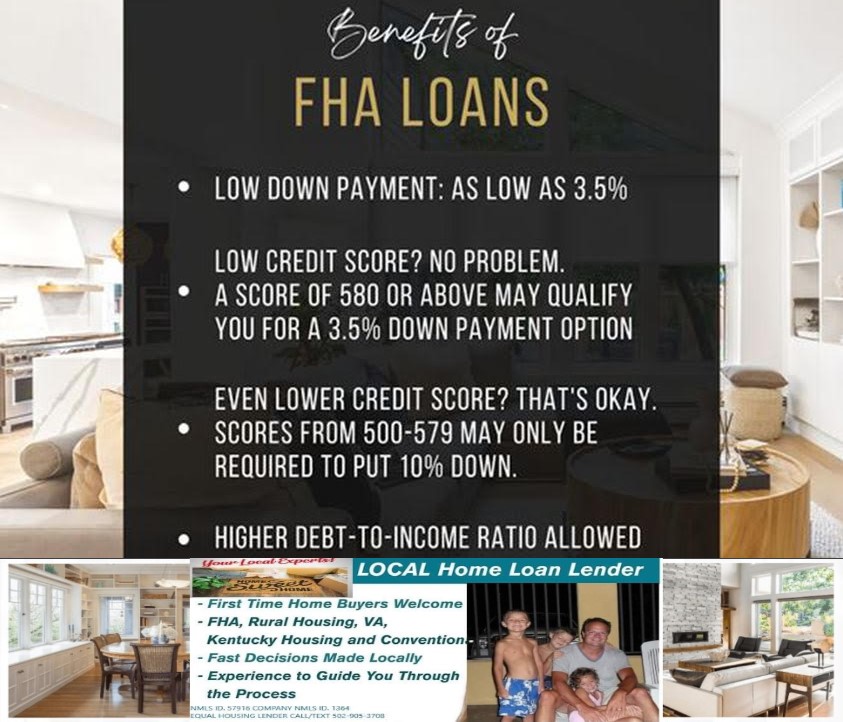
Here are some benefits of Kentucky FHA loans 🤩 ✅ Low down payment options ✅ Down payment assistance programs available ✅ Higher DTI ratios accepted
FHA requires you to establish that the income is in fact stable. I am covering Time on Job, Part Time Income, Seasonal Income and Job Gaps below.
Time on Job
There is not a minimum length of time a borrower must have held a position for the income to be eligible. However, the application must identify the most recent 2 years of employment.
If the borrower’s employment history indicates that they were in school or in the military, then the borrower must provide evidence supporting this such as college transcripts or discharge papers.
The current type of employment has to be supported by the college transcripts or discharge papers showing that he borrower’s training enabled them to gain employment in their field of training.
Part Time Income
Part-time and second job income can be used to qualify if documentation is obtained to prove that the borrower has worked the part-time job uninterrupted for the past two years, and plans to continue.
For Qualifying purposed, “part-time” income refers to jobs taken to supplement the borrower’s main income from regular employment, such as a second job that is less than 40 hours per week.
Income: Is averaged over the previous 2 years. If there was a pay rate increase and we can document the increase in pay, you can average the new pay rate over 12 months.
Seasonal Income
Seasonal income may be acceptable for qualifying. It is not unusual to have out-of-season income from unemployment income. If the borrower has a 2 year history and continuance is probable, this type of income may be allowed to qualify the borrower.
The key here is history and continuance.
Job Gaps
The borrower must provide a signed explanation for gaps in employment as follows:
Income can be considered effective if the following can be verified:
1. Borrower has been employed in the current job for at least six months at the time of the case number assignment AND
2. A two year work history prior to the absence from employment.
What does FHA stand for?
FHA stands for Federal Housing Administration, and the FHA is a government agency that insures mortgages. It was created just after the Great Depression, at a time when homeownership was prohibitively expensive and difficult to achieve because so many Americans lacked the savings and credit history to qualify for a loan. The government stepped in and began backing mortgages with more accessible terms. Approved lenders began funding FHA loans, which offered more reasonable down payment and credit score standards.
Today, government-backed mortgages still offer a safety net to lenders—because a federal entity (in this case, the FHA) is guaranteeing the loans, there’s less financial risk if a borrower defaults on their payments. Lenders are then able to loosen their qualifying guidelines, making mortgages available to middle and low income borrowers who might not otherwise be approved under conventional standards.
What’s the difference between FHA and conventional loans?
Home loans fall into two broad categories: government and conventional. A conventional loan is any mortgage that is not insured by a federal entity. Because private lenders assume all the risk in funding conventional loans, the requirements to qualify for these loans are more strict. Generally speaking, FHA loans might be a good fit if you have less money set aside to fund your down payment and/or you have a below-average credit score. While low down payment minimums and competitive interest rates are still possible with a conventional loan, you’ll need to show a strong credit score to qualify for those advantages.
Each loan type has advantages and disadvantages—including different mortgage insurance requirements, loan limits, and property appraisal guidelines—so choosing the one that works best for you really depends on your financial profile and your homebuying priorities.
FHA loans pros and cons
FHA loans are meant to make homeownership more accessible to people with fewer savings set aside and lower credit scores. They can be a great fit for some borrowers, particularly first time homebuyers who often need lower down payment options, but you should weigh the costs and benefits of any mortgage before committing. Here’s a breakdown of the key pros and cons when it comes to FHA loans:
Pros
Cons
Low down payment. Down payments make up the majority of cash to close in any purchase loan, and saving up for one can be a significant barrier for some borrowers. FHA loans make it possible to put down as little as 3.5% upfront and still get competitive rates.
Mandatory MIP payments. FHA loans are more lenient, but they also come with insurance costs to mitigate risk to the lender. You’ll have to pay Mortgage Insurance Premiums (MIP) no matter what—either for 11 years or for the life of your loan, depending on your down payment.
Lower credit score. Credit scores can be a major hurdle when it comes to conventional loans, but borrowers with credit scores starting at 500 can qualify for FHA loans.
Less competitive. Sometimes sellers can be more hesitant to accept FHA loans. In a competitive market, you might not win out against conventional loan bids.
Higher DTI accepted. Your debt-to-income (DTI) ratio gives lenders an understanding of other major financial obligations in your life. This ratio is a key factor in any loan application because it indicates your ability to afford a mortgage based on current household income and existing debt. Again, FHA loans offer more leniency here and borrowers at or below 43% DTI can qualify.
Stricter property standards. To offset risk and further protect lenders, FHA loans have strict criteria when it comes to assessing the condition of any property being purchased with an FHA loan. The downside? The house you want to buy might not qualify for an FHA loan. The upside? You’re less likely to be financially burdened by a home that requires expensive repairs or updates.
No income limitations. It’s a common misconception that FHA loans are only available to first-time homebuyers or borrowers with limited income—but they’re not. There’s no maximum income limit that would disqualify you from this type of loan.
Loan limits: FHA loan limits are typically lower than conventional loan limits, which means you might not be able to get funding for more expensive houses. This isn’t necessarily a bad thing, since it helps ensure that borrowers get loans they can afford to repay.
How to qualify for an FHA loan
Qualifying for an FHA loan is generally easier than qualifying for a conventional loan, but you’ll still need to meet some basic minimum standards set by the FHA. While the government insures these loans, the funding itself comes through FHA-approved lenders each lending institution may have slightly different qualifying guidelines for its borrowers. Keep in mind that, while these FHA standards offer a basic framework, you’ll need to confirm the individual qualifying rules with your specific lender.
Credit score minimum 500. Your exact credit score will play a big role in determining your down payment minimum; typically, the higher your credit score, the lower your down payment and the more favorable your interest rate.
Debt-to-income ratio at or below 56.9%. DTI is a standard way of comparing the amount of money you earn to the amount you spend paying off other debts, and FHA loans are more lax on this number.
Steady income and proof of employment. Being able to provide at least 2 years of income and employment records is a standard requirement for all loans.
Down payment between 3.5%-10%. The down payment minimum for an FHA loan is typically lower than conventional loan, and can be as little as 3.5% depending on your credit score and lender.
Property standards apply. You won’t qualify for an FHA loan if the house you want to buy doesn’t pass the appraisal process, which is more strict with this type of loan than conventional mortgages.
Maximum FHA loan amount. The amount of money you borrow cannot exceed the FHA loan limits; this number changes based on your county and is determined by how expensive the local market is; the maximum FHA loan limit in 2021 is $420,000 (check HUD resources to confirm the latest limits.)
Joel Lobb Senior Loan Officer (NMLS#57916)
American Mortgage Solutions, Inc. 10602 Timberwood Circle, Suite 3 Louisville, KY 40223
The view and opinions stated on this website belong solely to the authors, and are intended for informational purposes only. The posted information does not guarantee approval, nor does it comprise full underwriting guidelines. This does not represent being part of a government agency.
The views expressed on this post are mine and do not necessarily reflect the view of my employer. Not all products or services mentioned on this site may fit all people. NMLS ID# 57916, (http://www.nmlsconsumeraccess.org). Mortgage loans only offered in Kentucky. All loans and lines are subject to credit approval, verification, and collateral evaluation and are originated by lender. Products and interest rates are subject to change without notice.
Joel E Lobb American Mortgage 5029053708 email us here
Kentucky FHA, VA, USDA & Rural Housing, KHC and Fannie Mae mortgage loans.
FHA loans are a good option, especially if you have low credit or a lot of debt. But they come with their own set of drawbacks too.
FHA pros
Some of the best reasons to apply for an FHA home loan include:
Lenient credit requirements: You can generally qualify for maximum FHA financing with a credit score of 500 to 580 versus a 620 to 640 score for a USDA loan. You might also be eligible with a credit score between 500 and 579 if you can make a 10% down payment.
Higher debt-to-income ratios: Your back-end DTI — that is, your total monthly debt obligations — can be as high as 56.9% for FHA loans, but only 45% for USDA loans.
Potentially lower interest rates: FHA interest rates can be lower than rates for USDA loans because you have the option to choose shorter repayment terms, including a 15-year fixed interest rate. The USDA only offers 30-year fixed loans, which naturally have higher rates.
Multi-family units can qualify: Properties with up to four units can qualify for financing with an FHA loan when one unit is your primary residence. For example, purchasing a duplex with an FHA loan is allowed as long as you live in one half of the property. Like USDA loans, however, second homes and investment properties are ineligible.
FHA cons
Higher down payment requirements: Depending on your credit score, you’ll need to make a 3.5% or 10% down payment. USDA loans require no down payment.
Higher mortgage insurance premiums: Your upfront and annual mortgage insurance premiums are higher than the USDA guarantee fee and annual fee.
Difficult to cancel mortgage insurance: You’ll pay an annual mortgage insurance premium for the life of the loan unless your down payment is at least 10% — in which case, you’ll only pay mortgage insurance for the first 11 years.
Check your debt-to-income ratio (DTI). Mortgage lenders want to know how much debt you have compared to your income. It’s called your debt-to-income (DTI) ratio, and the better it is, the better mortgage terms you’ll get.
Find your DTI by plugging your financial numbers into Trulia’s affordability calculator. The percentage is found by dividing your debt by your income. For example, if your total debt is $3,000 a month (including your new mortgage payment), and your gross income is $6,000 a month, your DTI would be 50%.
Lenders typically prefer DTI to be no more than 36%—although some types of mortgages allow for a DTI of 50%. To lower yours, you can pay down debt or bring in more income.
One of the main pieces of an FHA loan approval is the borrower’s debt to income calculation. It is important that home buyers understand how this number is calculated and what they can do to improve their chances of getting approved.
Payments Included in Debt Ratios
Certain payments must be considered as part of a person’s overall debt when calculating the ratios. Items such as:
Payments for car loans
Payments on credit cards
Payments on unsecured loans
Child support payments
Alimony
Items Excluded from Debt Ratios
There are also some items not included in the debt to income ratio for FHA loans. Common examples would be:
Current rent payment
Money spent on entertainment
Expenses paid for child care
How to Overcome High Debt to Income Ratios
If a borrower has a compensating factor, it is possible for people with ratios higher than the proposed guidelines to get an approval for an FHA loan. Here are some examples of compensating factors:
Paying more than 10% of the purchase price as a down payment
Using income and expense records from the past two years to demonstrate that you have the ability and discipline to pay the housing expense
Having a large balance in a savings, investment or retirement account
For people that have a high debt to income ratio, it is possible to reduce the numbers. Paying off debt, such as credit cards or car loans can help. Sometimes it may be necessary to sell an expensive vehicle and get a cheaper payment in order to qualify for a loan.
You can often make a down payment as low as 3.5 percent down to a 580 credit score
You can finance a home with a 500 credit score with 10% down payment.
Kentucky FHA loans are assumable meaning that if you have a good rate on your current mortgage and the potential buyer of your home meets FHA guidelines, then he can assume your low rate mortgage
Kentucky FHA loans offer streamline refinancing without credit score minimums, verification of income, and no appraisals to refinance to a lower rate making it easier to qualify.
Kentucky FHA loans offer flexible terms when it comes to previous bankruptcy or foreclosures. 2 years removed from Chapter 7 with reestablished
credit, or if a Chapter 13, one year in the payment plan is eligible for FHA financing.
Foreclosures on a past home. FHA will finance a home 3 years removed from the sale date of your foreclosure property
30 year fixed rate mortgage with usually the best going rates on government insured loans like FHA, VA, USDA etc.
No prepayment penalty on Kentucky FHA loans.
Higher debt to income ratio requirements when compared to Conventional loans because most Fannie Mae Conventional loans cannot have a higher debt to income ratio than 45% on the back-end
You can make an FHA loan anywhere in the state of Kentucky with no geographical restrictions.
Will allow for down payment assistance and grants for borrowers minimum down payments in the State of Kentucky through the likes of KHC, Welcome Home Grant, and Kentucky Housing Down Payment Second Mortgage loans.
Kentucky FHA loans allow for unoccupied cosigner. For example, lets say you have a daughter that is getting ready to graduate college and does not have the income or credit history established yet to buy a home. FHA allows a family-member to co-sign for them to buy a home and you don’t have to occupy as primary residence. Note, FHA co-singers are not allowed to makeup for some that has bad credit, because they will take the lowest credit scores of both applicants. FHA usually allows for co-singers lack of income purposes only.
Can usually close within 30 days just like a regular conventional mortgage. No extra time to close an FHA loan in Kentucky versus other secondary market loans like VA, USDA, Fannie Mae.
You can use the FHA loan over and over. You can actually have two FHA loans open at the same time, but it gets tricky on this. Call or text me with more info if you have an FHA loan currently and would like to use FHA Financing again.
FHA loans aren’t just for first time home buyers in Kentucky.
Disadvantages of Kentucky FHA Mortgage Loans
There are loan limits in the State of Kentucky on FHA Mortgage loans. The maximum FHA loan in the state of Kentucky is $$420,680 for 2022. So if you were needing to finance a loan over this amount, you would need to look at doing a Conventional loan with the updated 2021 Kentucky State Loan Limits for a Fannie Mae loan being $647,250
Seller must have own the home for 90 days before you can make an offer on the home. This comes into play where the seller bought the home as an investor and rehabbed the property and wants to sell for a quick profit. FHA mandates seller must maintain for 90 days before you can write up an offer on it. Also called FHA Flipping Policy. Read more here
There is mortgage insurance. This is one of the biggest disadvantages for FHA loans. But as I tell most people, nobody rarely has a loan for 30 years, so if it meets your payment and your cash to close requirement, I tell people to go with it because it can be refinanced down the road and you are getting one of the lowers 30 year fixed rates out there. Both upfront and monthly mortgage insurance premiums you have to pay HUD/FHA. These premiums change whenever FHA/HUD replenish their insurance pool to pay claims from defaults, but currently the FHA upfront mortgage insurance premium is 1.75% and monthly is .85% and .80% of the loan amount. If you happen do a 15 year term or shorter, the mortgage insurance is cheaper monthly with .45 and .70 respectively each month. The upfront mortgage insurance is the same for a 30 year and 15 year at 1.75%
FHA Mortgage insurance can be on the loan for life of loan. This is a recent change made in 2016 when FHA lowered there premiums for upfront and monthly mi premiums, but made the mortgage insurance for life of loan for some FHA loans.
If you put down more than 10% on the loan, or have at least 10% equity in the home for a refinance, you only have to pay mortgage insurance for 11 years before it automatically falls off.
Obviously you can refinance out of an FHA loan at anytime, since it does not a prepayment penalty, and you can potentially get a refund of your upfront mortgage insurance if paid off within 3 years on sliding scale.
I have incorporated some charts below to illustrate the different Kentucky FHA Mortgage Insurance premiums to explain it better.
The upfront mortgage insurance is usually financed into the loan, so it will look like you are borrowing more than the standard 3.5% down payment because this is financed into the loan. Some borrowers elect to pay it out of pocket upfront, but I have never seen this done in my 20 years of doing FHA loans in the State of Kentucky
Kentucky FHA Loans Greater Than 15 Years MIP Chart
👇
Base Loan Amt.
LTV
Annual MIP
≤$625,500
≤95.00%
80 bps (0.80%)
≤$625,500
>95.00%
85 bps (0.85%)
>$625,500
≤95.00%
100 bps (1.00%)
>$625,500
>95.00%
105 bps (1.05%)
Kentucky FHA Loans Less Than or Equal to 15 Years MIP Chart👇
Base Loan Amt.
LTV
Annual MIP
≤$625,500
≤90.00%
45 bps (0.45%)
≤$625,500
>90.00%
70 bps (0.70%)
>$625,500
≤78.00%
45 bps (0.45%)
>$625,500
78.01% – 90.00%
70 bps (0.70%)
>$625,500
>90.00%
95 bps (0.95%)
When can I get the FHA mortgage insurance off my Mortgage Loan? See chart below 👇👇
Appraisals. On an FHA appraisal, the FHA appraiser has to turn on the utilities to make sure they are in worked order when he gets there. This is different that Conventional loan appraisals. A lot of realtors or buyers think that FHA loans are harder due to appraisals, but honestly, they’re really not. FHA puts these minimum HUD standards in place to make sure the home is in good working order and SAFE to live in. I.e.is there any lead based paint or chipping paint that could lead to poisoning It is all about Safety with FHA and HUD on these appraisals. The value is determined just like a regular Conventional, USDA, VA appraisals whereas they compare the house to 3 recent homes sold in the area to get a value.
Some lenders don’t offer FHA loans due to their complexity and sale on the secondary market, so if you call a local lender in Kentucky and they don’t offer FHA loans, the reason is usually they don’t have the team in place to do them or don’t want to do them due to lack of experience on the secondary government market.
Government Liens. FHA will not be an option for you usually if you have unpaid federal tax liens, delinquency on federal backed-government loans, or a claim with social security etc. FHA loans are ran through aCAVIRS alert system to check to see if you are delinquent on any federal oblation. If so, this swill stop you until you can clear the CAVIRS alert system. For example, I did a loan for a buyer that had a delinquent federal debt with his student loan that happened over 14 years old. It was off the credit report and title search, so I had to switch to a conventional loan to make the home loan work.
FHA loans are not good for second homes or investment properties. FHA loans are mainly for single family residence 1-4 unit, that are going to occupied primarily as main home.
In summary, FHA loans have few drawbacks other than the mortgage insurance in my opinion. It is a great first time home buyer program or borrowers with past credit problems to get into a house of their own with very little out of pocket, at a low 30 year fixed rate, and no prepayment penalty
Questions about qualifying for a FHA loan in Kentucky . Give me text, call or email below. Love to help you out on your next home or refinance in Kentucky
Read more below about specific FHA Loans in Kentucky.👇👇👇
If you are an individual with disabilities who needs accommodation, or you are having difficulty using our website to apply for a loan, please contact us at 502-905-3708.
Disclaimer: No statement on this site is a commitment to make a loan. Loans are subject to borrower qualifications, including income, property evaluation, sufficient equity in the home to meet Loan-to-Value requirements, and final credit approval. Approvals are subject to underwriting guidelines, interest rates, and program guidelines and are subject to change without notice based on applicant’s eligibility and market conditions. Refinancing an existing loan may result in total finance charges being higher over the life of a loan. Reduction in payments may reflect a longer loan term. Terms of any loan may be subject to payment of points and fees by the applicant Equal Opportunity Lender. NMLS#57916http://www.nmlsconsumeraccess.org/
— Some products and services may not be available in all states. Credit and collateral are subject to approval. Terms and conditions apply. This is not a commitment to lend. Programs, rates, terms and conditions are subject to change without notice. The content in this marketing advertisement has not been approved, reviewed, sponsored or endorsed by any department or government agency. Rates are subject to change and are subject to borrower(s) qualification.
Assets are not required; however, any assets disclosed must be supported with appropriate documentation
Satisfactory explanation and documentation should be provided for large deposits or increases in liquid assets
Cash on hand is not acceptable
Bank accounts require Verification of Deposit with average 2 month balance, or 2 consecutive months statements dated within 45 days of loan application
Earnest money deposit may be considered an asset if deposit is not already reflected in liquid assets
Asset amount of retirement accounts is 60% of the vested account balance
Gifts must be documented through gift donor letter and establish that gift does not have to be repaid
For sale proceeds of real property, provide HUD-1 or equivalent closing statement to indicate the actual amount of cash proceeds realized by the borrower
Stocks and bonds must be documented by a statement provide by stockbroker or financial institution managing the portfolio
Households with net family assets of greater than $5,000 require that the actual income derived from all net family assets or a percentage of the value of such assets based on the current passbook savings rate be considered when calculating income.
Give us a try or let us compare your options on your next mortgage transaction. Call me locally at 502-905-3708. Free Mortgage Pre-Qualifications same day on most applications.
I specialize in Kentucky FHA, VA ,USDA, KHC, Conventional and Jumbo mortgage loans. I am based out of Louisville Kentucky. For the first time buyer with little money down, we offer Kentucky Housing or KHC loans with down payment assistance.
This website is not an government agency, and does
not officially represent the HUD, VA, USDA or FHA or any other government agency.








 Kentucky FHA Mortgage Lender