
Four Things Not to do When Getting a Mortgage

We discuss various things such as credit, income, assets, family, and future plans. During these discussions, I have discovered that not only must I tell the borrowers what to do, I need to place a lot of emphasis on what not to do.

1) Do not apply for credit cards while waiting to be approved for a mortgage. Most lenders will “monitor” your credit profile during the process or recheck your credit report before closing. More available credit can mean a lower credit score and a higher DTI (debt to income ratio used to determine if you qualify to buy – money coming in verses money going out). This can also delay a closing because the future homeowner may have to provide a statement from the account to the underwriter.

2) Do not be late on any payment. If you are late on a payment prior to closing, your score will drop. I saw one this morning drop from 679 to 582. Crazy! An underwriter will not approve your home loan if you cannot show the ability to pay a bill on time.

3) Do not quit your job. If anything changes regarding your employment, tell your loan officer. One of the last things a lender does prior to closing is verify employment. No job. No loan. This has actually happened.

4) Do not accept cash gifts and deposit them into your bank account. Cash gifts are very difficult,if not impossible to prove. If you are receiving a gift in order to make the down payment at closing, talk to your loan officer first. He or she can make your life a lot easier with just a little guidance and direction.

I know that the four items above may seem simple, but what if the buyer does not know and goes down that path? It is painful to have worked so hard to buy the home of your dreams only to have it taken away due to one bad decision. I work for one of the best mortgage companies in the country and I help people get a home loan every day. But it is also my job to inform inform inform.

mortgageblogonline's avatarStuff About Mortgages

A credit card, the biggest beneficiary of the ...

I spend a lot of time advising potential home buyers regarding homes in Georgia.  We discuss various things such as credit, income, assets, family, and future plans.  During these discussions, I have discovered that not only must I tell the borrowers what to do, I need to place a lot of emphasis on what not to do.

1)  Do not apply for credit cards while waiting to be approved for a mortgage.  Most lenders will “monitor” your credit profile during the process or recheck your credit report before closing.  More available credit can mean a lower credit score and a higher DTI (debt to income ratio used to determine if you qualify to buy – money coming in verses money going out).  This can also delay a closing because the future homeowner may have to provide a statement from the account to the underwriter.

2)  Do not be late on…

View original post 277 more words

FHA says as many as 50,000 mortgages will be affected by new lending rules

Two weeks ago, the FHA took steps to limit risk to its single-family portfolio, announcing that it will flag some loans for manual underwriting. FHA’s Chief Risk Officer Keith Becker told the WSJ just how many loans the agency thinks will be affected, adding that the FHA felt that it was appropriate to take some steps to mitigate the risks we’re seeing.

FHA Loan Changes for Kentucky Home Buyers in 2019


Two weeks ago, the Federal Housing Administration took steps to mitigate risks to its single-family portfolio, announcing updates to its TOTAL Mortgage Scorecard that will flag some loans for manual underwriting.

The move upset a number of lenders who feared that some of their borrowers would be shut out of FHA financing and that borrowers who began the process but no longer qualified under new guidelines would be angry.

Turns out, their fears have some merit.

An FHA official told The Wall Street Journal that approximately 40,000 to 50,000 loans a year will likely be affected, which amounts to about 4-5% to all the mortgages the FHA insures on an annual basis.

“We have continued to endorse loans with more and more credit risk,” said FHA’s Chief Risk Officer Keith Becker. “We felt that it was appropriate to take some steps to mitigate the risks we’re seeing.”

The WSJ points out that the move is a complete reversal of the agency’s 2016 decision to loosen underwriting standards, nixing an old rule that required manual underwriting for loans with credit scores below 620 and a debt-to-income ratio above 43%.

close dialog
Stay ahead of the market with
Daily Update
Around the clock coverage and information about the US mortgage and housing industry
Sign Up
No thanks

But the agency’s annual report to Congress released in November revealed risk trends that threatened to drain the program, among them a significant increase in cash-out refinances, a drop in average borrower credit score, and a jump in borrowers with high DTIs.

Requiring manual underwriting for riskier loans is intended to curb these risks, and there’s a good chance a number of borrowers will no longer qualify.

According to Becker, it’s likely that many of the loans flagged for manual underwriting won’t end up passing muster.


Source: FHA says as many as 50,000 mortgages will be affected by new lending rules

Latest FHA shift to mitigate risks may shut out some Kentucky home buyers wanting FHA Loans in 2019

Kentucky FHA Loan Changes for Fico and Credit Scores for 2019


Latest FHA shift to mitigate risks may shut out some homebuyers:

Kentucky FHA Loan Changes for FICO Scores and Credit Scores for 2019

Kentucky FHA Loan Changes for Fico and Credit Scores for 2019

Last week, the Federal Housing Administration took steps to mitigate risks to its single-family portfolio, announcing updates to its TOTAL Mortgage Scorecard that may flag some loans for manual underwriting.
The change applies to all loans with case numbers assigned on or after March 18th, meaning that it is likely to affect some of the loans currently sitting in an FHA lender’s pipeline.
Chatter among members of the lending community suggests a number of originators are unhappy about the changes, fearing that the end result may be that some of their borrowers will be shut out of FHA financing.
Some said the FHA did not go about implementing the changes the right way, creating confusion about how the risk is being mitigated, while others said they felt as if the rug had been pulled out from under them, and fear that borrowers who no longer qualify will be angry, according to email exchanges between lenders and mortgage brokers, shared with HousingWire.
For its part, the FHA said it is taking necessary steps to address some of the risk trends apparent in its single-family portfolio and flagged as concerning in its 2018 Report to Congress.
Specifically, FHA loans have seen a substantial increase in cash-out refinances, a drop in the average borrower credit score, and an increase in borrowers with high debt-to-income ratios.
In its letter about the Scorecard updates, the FHA said that the number of FHA refinances that are cash-outs increased 60% in 2018, and that almost a quarter of all FHA loans in 2018 had a DTI ratio above 50%.
The average credit scores for FHA borrowers has also declined, falling to 670 in 2018 – the lowest average since 2008.
Combined, these factors are signaling untenable risk for the agency as they flag the potential for the program to drain the Mutual Mortgage Insurance Fund.
“Federal Housing Commissioner Montgomery has publicly stated numerous times in recent months that FHA must seek the right balance between managing risk and fulfilling its mission of supporting sustainable home-ownership,” the FHA said in its letter.
“To be successful long term, FHA must maintain the integrity of its insurance endorsements,” it continued. “This includes assessing the causes of the increase in higher-risk credit characteristics in the portfolio and making prudent and necessary changes to re calibrate and adjust its policies as warranted to manage credit risk.”
The agency said the updates to its Scorecard are just the first step it will be taking to address these risk factors.
“FHA will carefully monitor the impact of this change and is preparing to implement additional changes to maintain a better balance of managing risk and fulfilling its mission,” the agency stated.


I can answer your questions and usually get you pre-approved the same day. 


Call or Text me at 502-905-3708 with your mortgage questions.
Email Kentuckyloan@gmail.com

Joel Lobb
Mortgage Loan Officer
Individual NMLS ID #57916
 
American Mortgage Solutions, Inc.
10602 Timberwood Circle 
Louisville, KY 40223
Company NMLS ID #1364

Text/call:      502-905-3708

fax:            502-327-9119
email:
          kentuckyloan@gmail.com


Source: Latest FHA shift to mitigate risks may shut out some homebuyers

FHA eliminates two unnecessary and outdated lending roadblocks

The Federal Housing Administration has taken steps to reduce some of the regulatory burdens that belabor the lending process, releasing two mortgagee letters Tuesday with updated guidelines on home warranty and inspection requirements for single-family FHA loans. FHA Commissioner Brian Montgomery said the moves align with the administration’s goal streamline and update guidelines in an effort to reduce regulatory barriers.

Source: FHA eliminates two unnecessary and outdated lending roadblocksKentucky FHA Guidelines for Inspections and Warranty's

>The Kentucky MCC Program

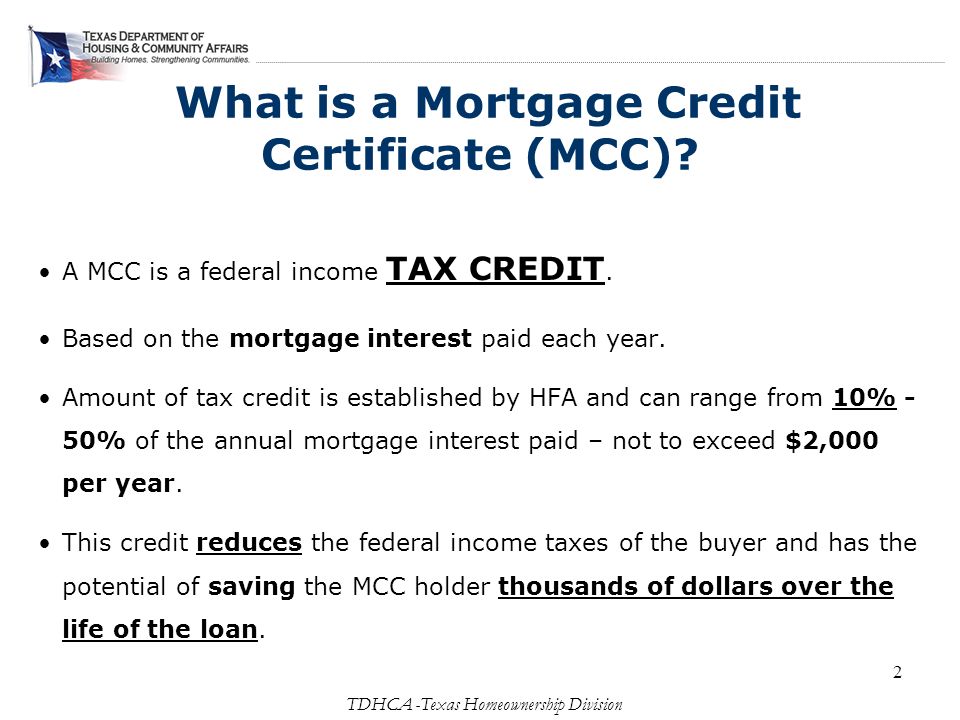
The MCC (Mortgage Credit Certificate) program is a state tax credit program currently available to qualified buyers. It allows a tax credit of up to 25% of the mortgage interest paid each year, not to exceed $2000, for qualified buyers, for each year of ownership during the term of the mortgage. The MCC is available to qualified first-time home buyers in all Kentucky counties and to all qualified homebuyers in certain areas, including Jefferson, Oldham, Bullitt, Nelson, Meade, Hardin and Spencer County

Kentucky Mortgage Broker Offering FHA, VA, USDA, Conventional, and KHC Down Payment Assistance Home Loans's avatarLouisville Kentucky Mortgage Loans

The Kentucky MCC Program!!

Image result for MCC (Mortgage Credit Certificate) program

The MCC (Mortgage Credit Certificate) program is a state tax credit program currently available to qualified buyers. It allows a tax credit of up to 25% of the mortgage interest paid each year, not to exceed $2000, for qualified buyers, for each year of ownership during the term of the mortgage. The MCC is available to qualified first-time home buyers in all Kentucky counties and to all qualified homebuyers in certain areas, including Jefferson, Oldham, Bullitt, Nelson, Meade, Hardin and Spencer County

via >The Kentucky MCC Program

View original post